
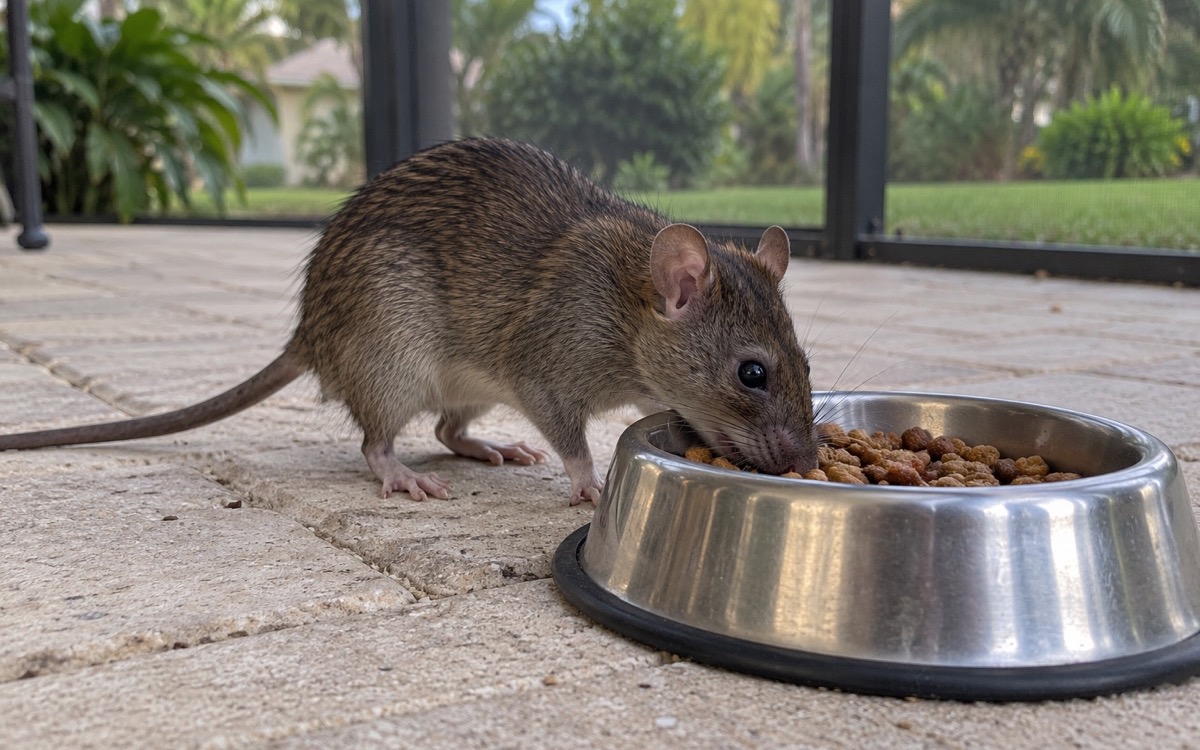
What attracts pests to your home comes down to three things: food, water and a place to hide. In Brevard County, most houses offer all three by accident, through small habits like mulch piled on the slab or pet food left on the lanai. Fix those and you remove most of the reasons pests come.
TL;DR
- Pests come for food, water and shelter. Take away one and the problem gets smaller.
- Mulch against the wall, wet soil and leaks feed termites and roaches.
- Palm fronds and branches touching the roof give roof rats a bridge.
- Pet food, bird seed and trash are free meals for rats, ants and roaches.
- Most of this you can fix yourself this weekend.
Is your landscaping the problem?
Often, yes. Plants and mulch right against the house make a sheltered path to your walls.
UF/IFAS says to keep at least 6 inches of open space between the siding and the soil or mulch line. That gap lets you see mud tubes, and it keeps the soil beside the wall drier. They also say a thin mulch layer, under about 2 inches, within a foot of the foundation lets the soil dry. In Florida block homes, the slab edge is where termites like to come up, so a thick mulch bed there hides them. Our termite control page covers what an inspection looks at.
Palm fronds and tree limbs touching the roof are the other big one. Roof rats climb. UF/IFAS lists palm trees and ornamental shrubs as places they live, and says to keep trees and branches trimmed away from the building. A frond on the shingles is a ramp.
Which food and water sources do people forget?
Everybody knows about crumbs. The ones people miss are outside.
- Pet food on the lanai. A bowl left out overnight feeds ants, roaches and rats. Pick it up after meals.
- Bird feeders. Spilled seed on the ground draws rats. UF/IFAS says to keep bird seed and pet food in rodent proof containers, such as a metal can with a tight lid. We wrote more in your bird feeder is feeding more than birds.
- Trash and recycling. Cans without tight lids, and bins that sit in the garage.
- Standing water. Florida Department of Health says mosquitoes can breed in about a bottle cap of water. Empty flowerpot saucers, buckets and clogged gutters. Water pooling at the foundation also keeps the soil wet next to your wall.
- Leaks. Dripping pipes, AC condensate lines and sprinklers aimed at the wall. UF/IFAS lists these as moisture problems that favor subterranean termites.
What about gaps and garage doors?
Pests do not need a big hole. Small gaps are enough for most of them.
Check the garage door first. A worn rubber seal along the bottom leaves a gap the whole width of the door, and garages are where food, bins and boxes live. Look next at door sweeps, holes where pipes and wires enter the wall, and torn screens. UF/IFAS lists door edges, pipe holes, roof vents, exhaust fans and eave vents as the places to close up against rodents. See our rodent control page for what that work involves.
What we see in Brevard
Roof rats are the rat we find in Melbourne attics, and they come in by roof and tree, not the front door. Ghost ants and other small ants follow moisture and sweet spills into kitchens and bathrooms. Palmetto bugs, the American roach, move in from outside when it rains or when mulch and leaf litter sit right on the wall. Drywood termites and subterranean termites are both in Brevard County, and the second kind needs moist soil.
The beachside has more salt, more wind and more fronds on roofs. Snowbird homes that sit empty have a different problem: nobody notices a leak or a feeder for months. Humidity helps every one of these pests along, all year.
What to do now
- Walk the house. Pull mulch back so you can see 6 inches of bare wall at the slab.
- Trim palm fronds and branches away from the roof and walls.
- Move pet food, bird seed and trash into sealed containers. Bring bowls in at night.
- Dump standing water. Fix leaks and point sprinklers away from the walls.
- Look at the garage door seal and door sweeps. Replace what is cracked or worn, and close gaps around pipes.
When to call somebody
You can do the steps above without us. Call if you hear scratching in the attic, see droppings, or find mud tubes or wings near a window. Ants, roaches or rats that keep coming back after you fix the cause also need a look. A visit from our general pest control team is free to estimate.
Sources
- UF/IFAS: Rat and Mouse Control (ENY-224)
- UF/IFAS: Termite Prevention and Control (ENY-2044)
- UF/IFAS: The Facts About Termites and Mulch (ENY-832)
- Florida Department of Health: Drain and Cover
Frequently Asked Questions
What attracts pests to a home in Brevard County?
Food, water and shelter. Common causes are mulch against the slab, palm fronds touching the roof, pet food and bird seed left out, standing water, leaks and gaps around the garage door.
How far should mulch be from my house?
UF/IFAS says to keep at least 6 inches of open space between the siding and the soil or mulch line, and to keep mulch thin, under about 2 inches, within a foot of the foundation.
Do palm fronds touching the roof attract rats?
They can. Roof rats climb and live in palm trees and shrubs, so trim fronds and branches away from the roof and walls.
Does pet food or bird seed attract pests?
Yes. Pet food left out overnight feeds ants, roaches and rats, and spilled bird seed draws rats. Store both in sealed, rodent proof containers.
Dealing with this at your place?
Gator Pest Control has served Brevard County since 1994. Free estimates, no contracts.
Get a Free Estimate Call (321) 253-1188