
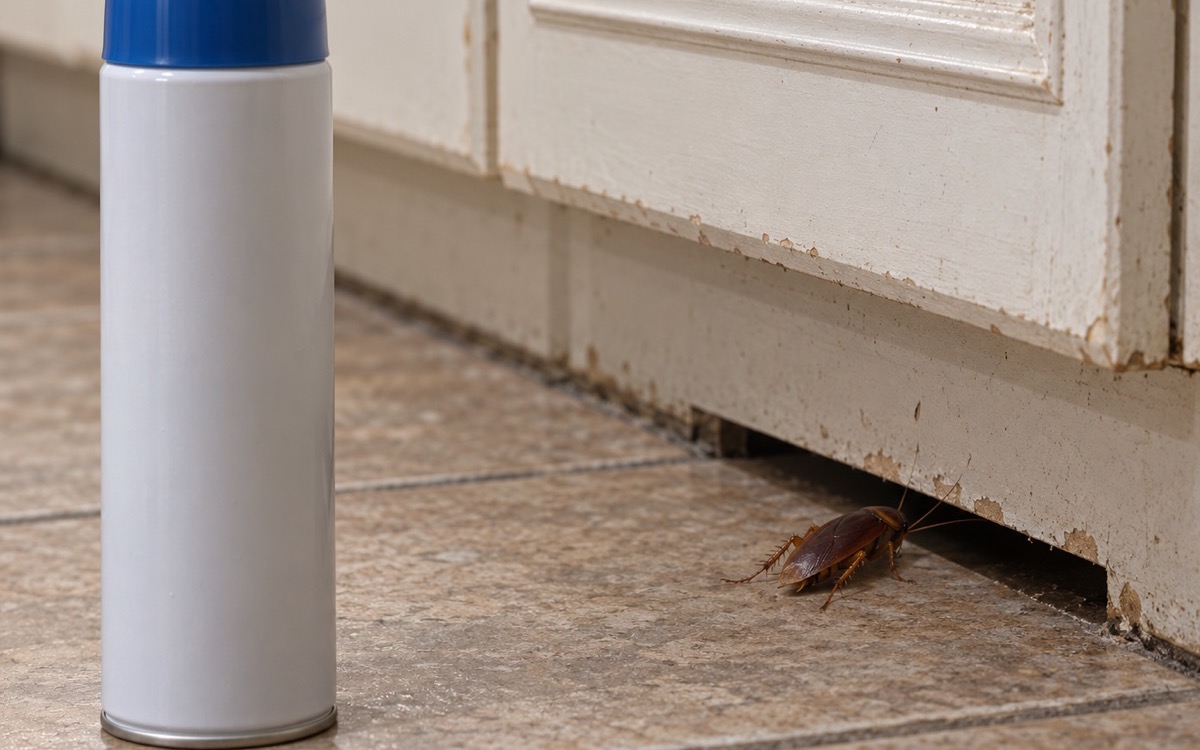
DIY pest control works for a few small jobs, but it often fails in Florida because store products kill the bugs you see and miss the colony, the entry point and the cause. If you live in Brevard County and the same pest keeps coming back after a can of spray, that is the sign to stop and call someone.
TL;DR
- Store sprays kill what they touch. They do not reach nests, eggs or the wall void.
- Florida heat and humidity keep pests breeding all year, so a weak fix gets undone fast.
- DIY is fine for a stray ant trail or one wasp nest you can see. It is a poor bet for termites and rats.
- Spraying over a professional treatment can scatter roaches and break the barrier.
- Call when the pest returns, shows up in the attic or walls, or you cannot name it.
Why does DIY pest control fail in Florida?
Most of a pest problem is out of sight. The roaches you see at night are a small part of the group. The ants on the counter are workers from a colony that may be outside, in a wall, or under a slab.
A store spray works on contact. It kills the bug in front of you. It often does not carry back to the nest, and it does not touch eggs. A German roach female carries 30 to 40 eggs in one hard case, according to UF/IFAS Extension. Spray the adults and the next batch hatches behind you.
There is a second problem: the wrong product for the pest. Many people cannot tell a ghost ant from a Caribbean crazy ant, or a palmetto bug from a Florida woods roach. Each one eats different food and nests in a different place, so the wrong product wastes your time.
Which pests can you handle yourself?
Some jobs are small enough. One ant trail from a spilled drink, a spider in the garage, or a single paper wasp nest you can see from the ground are normal home jobs. Wipe the trail, remove the food, seal the gap, and watch it for a week.
Read the label and follow it. The EPA says the label is the legal instructions for how to use a product, and that covers where it can go, how much, and where it must not. See the EPA guide to safe pest control.
Which pests should you not handle yourself?
Termites are the big one. Drywood and subterranean termites work inside wood and soil where a can of spray never reaches. See our termite control page and the termite warning signs post.
Rats are the next. Poison and loose traps do not fix the gap that let them in. EPA rules for consumer rodent bait call for tamper-resistant bait stations because poison can harm pets, kids and wildlife. Our rodent control page covers the full job: find the entry, seal it, then deal with the rats.
Large roach colonies belong on this list too.
What we see in Brevard
Florida gives pests a long season. Warm weather and humidity mean ants, roaches and rats do not take a winter break. A fix that would hold in a cold state lasts weeks here.
Roof rats are the rat we find in Melbourne attics, and they come in along tree branches and power lines. Ghost ants are tiny and hard to trace back to the nest. Drywood termites live in the wood of the house itself. Block construction does not stop any of this, because pests use the gaps around pipes, the soffits and the attic.
Lanais, screened porches and beachside homes with salt air and damp corners add more hiding places. Snowbird homes sit empty for months, so a small problem can grow before anyone walks in.
The most common DIY mistake is spraying over a treatment a pro just did. We wrote about it in why you see more bugs after pest control.
What to do now
- Name the pest. Take a clear photo and note where and when you see it.
- Remove food, water and clutter that feeds it. Fix leaks and seal gaps around pipes and doors.
- Use only a product made for that pest and follow the whole label.
- Give it two weeks. If activity drops, good. If it climbs, stop spraying.
- Do not treat termites or rats on your own. Call for an inspection.
When to call somebody
Call when the same pest returns after two rounds of DIY, when you hear or smell something in the attic or walls, when you see wood damage or mud tubes, or when you cannot tell what you have. Our general pest control page explains what a visit covers. The estimate is free.
Sources
- UF/IFAS Extension: German Cockroach
- EPA: Safe Use of Pesticides
- EPA: Rodenticide Products for Consumer Use
Frequently Asked Questions
Does DIY pest control work in Florida?
It works for small jobs like one ant trail or a single wasp nest you can see. It often fails for bigger problems because store sprays kill the bugs you see and miss the nest, the eggs and the entry point.
Which pests should I not treat myself?
Termites and rats. Termites work inside wood and soil where a spray does not reach, and poison or loose traps do not fix the gap that let rats in.
Why do bugs keep coming back after I spray?
A store spray works on contact and does not touch eggs or the nest. A German roach female carries 30 to 40 eggs in one case, so the next batch hatches after the adults die.
When should I call a pest control company?
Call when the same pest returns after two rounds of DIY, when you hear or smell something in the attic or walls, when you see wood damage or mud tubes, or when you cannot tell what you have.
Dealing with this at your place?
Gator Pest Control has served Brevard County since 1994. Free estimates, no contracts.
Get a Free Estimate Call (321) 253-1188