
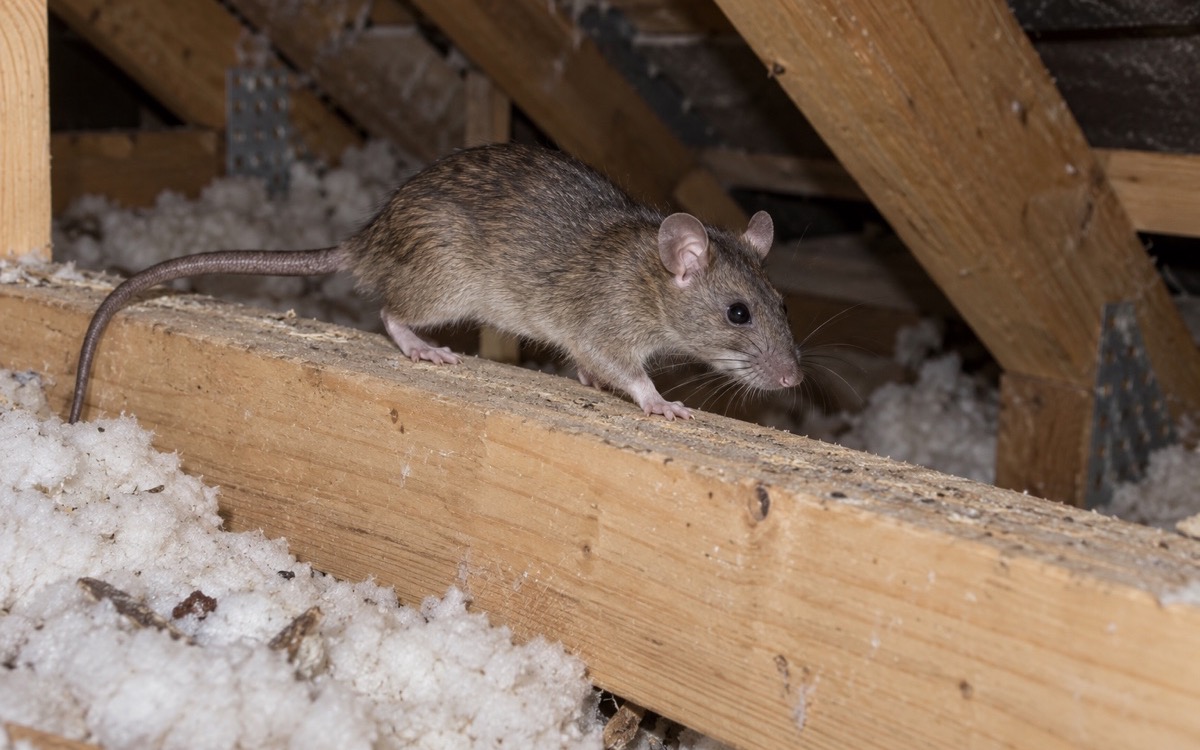
The main signs of rodents in your attic are droppings, a musky smell, dark grease marks, chewed wire and insulation that looks flattened or tunneled. Any one of them is worth a look. In a Brevard County home, the rodent is usually a roof rat, and it can do real damage before you ever hear it.
TL;DR
- Droppings are the clearest sign. Roof rat droppings are dark, spindle shaped and up to about half an inch long.
- Look for dark grease marks along beams and pipes, and tunnels or flattened patches in the insulation.
- Chewed wire is the sign that matters most. It is a fire risk.
- If you hear noises at night, read our post on that first, then use this list to confirm.
- Do not sweep or vacuum droppings. Wet them first.
Signs of rodents in your attic, one by one
Droppings. Roof rat droppings are spindle shaped, up to about half an inch long. Fresh ones are black, shiny and soft. Old ones turn gray and dusty and crumble. Look along beams, near the attic hatch, and around the edges where the roof meets the wall. A pile in one spot means a regular path.
Smell. A stale, musky, ammonia type smell that gets stronger when you open the attic hatch. Urine builds up in insulation, so the smell lingers even when the rats are quiet.
Grease marks. Rats follow the same routes every night. Their fur leaves dark, oily smudges on beams, rafters, pipes and the edges of openings. A smudge is a trail map.
Chewed material. Rodents gnaw every day to keep their teeth short. Fresh gnawing on wood is light colored with sharp, splintery edges. Old gnawing is smooth and darker. Check wire, plastic pipe, duct, and the edges of beams.
Disturbed insulation. Tunnels, flattened trails, shredded patches and nests made of insulation, paper and cloth. Nests are often tucked against a warm duct or in a corner away from the hatch.
If your main clue is a sound, we cover that in noises in the attic at night. This post is the full checklist.
What damage do rodents do in an attic?
The damage comes from gnawing, nesting and waste. UF/IFAS Extension says roof rats can be destructive in attics, gnawing on electrical wires and rafters.
- Wire. Chewed insulation on a wire is a fire and shorting risk. You may not see it from the hatch.
- Insulation. Urine and droppings soak in. Tunneled, matted insulation does not do its job, and the AC works harder.
- Ducts and pipes. Chewed flexible duct leaks cold air into the attic. A chewed line can leak water.
- Wood. Gnawing at edges and entry points gets bigger every month.
Cleanup matters too. The CDC says not to sweep or vacuum rodent droppings or nesting material, because that puts tiny droplets in the air you breathe.
What we see in Brevard
Roof rats are the rat we find in Melbourne attics. They climb well, so they come in from the roofline, not the ground. Palm trees, oak branches touching the roof, and fruit trees give them a road up.
Concrete block homes still have attics, and the attic is a wood and insulation space the rats can reach through soffit gaps, roof vents and the spots where lines enter the house. Beachside homes in Satellite Beach and Indialantic get the same pressure.
Snowbird homes are a different problem. A house that sits empty for months gives rats a quiet attic with nobody to hear them. The first sign is often a smell or droppings when the owners return. Our snowbird home pest check post covers what to look at on arrival.
What to do now
- Look from the hatch with a flashlight. Do not step between the joists. Look for droppings, grease marks and flattened insulation.
- Check the garage and eaves for chew marks, gaps and droppings near the roofline.
- Do not sweep or vacuum droppings. Wet them with a bleach and water mix of 1 part bleach to 9 parts water, wait 5 minutes, then wipe up with paper towels and gloves on.
- Trim tree branches that touch or hang over the roof.
- Write down what you saw and where, with photos, before anyone cleans.
When to call somebody
Call if you find droppings, grease marks or any chewed wire. Wire damage is the part I would not leave. Sealing the holes before the rats are out can trap them inside, so the order of the work matters. You can see what we do on our rodent control page, and the estimate is free.
Sources
Frequently Asked Questions
What are the signs of rodents in your attic?
The main signs are droppings, a musky smell, dark grease marks along beams and pipes, chewed wire or wood, and insulation that looks flattened, tunneled or shredded.
What do roof rat droppings look like?
Roof rat droppings are dark, spindle shaped and up to about half an inch long. Fresh ones are black and shiny. Old ones are gray and dusty and crumble.
What damage do rodents do in an attic?
Roof rats gnaw on electrical wires and rafters, which is a fire and shorting risk. Urine and droppings soak into insulation, and chewed ducts and pipes can leak.
Should I sweep up rodent droppings in the attic?
No. The CDC says not to sweep or vacuum droppings or nesting material. Wet them with a bleach and water mix of 1 part bleach to 9 parts water, wait 5 minutes, then wipe up with paper towels.
Dealing with this at your place?
Gator Pest Control has served Brevard County since 1994. Free estimates, no contracts.
Get a Free Estimate Call (321) 253-1188