
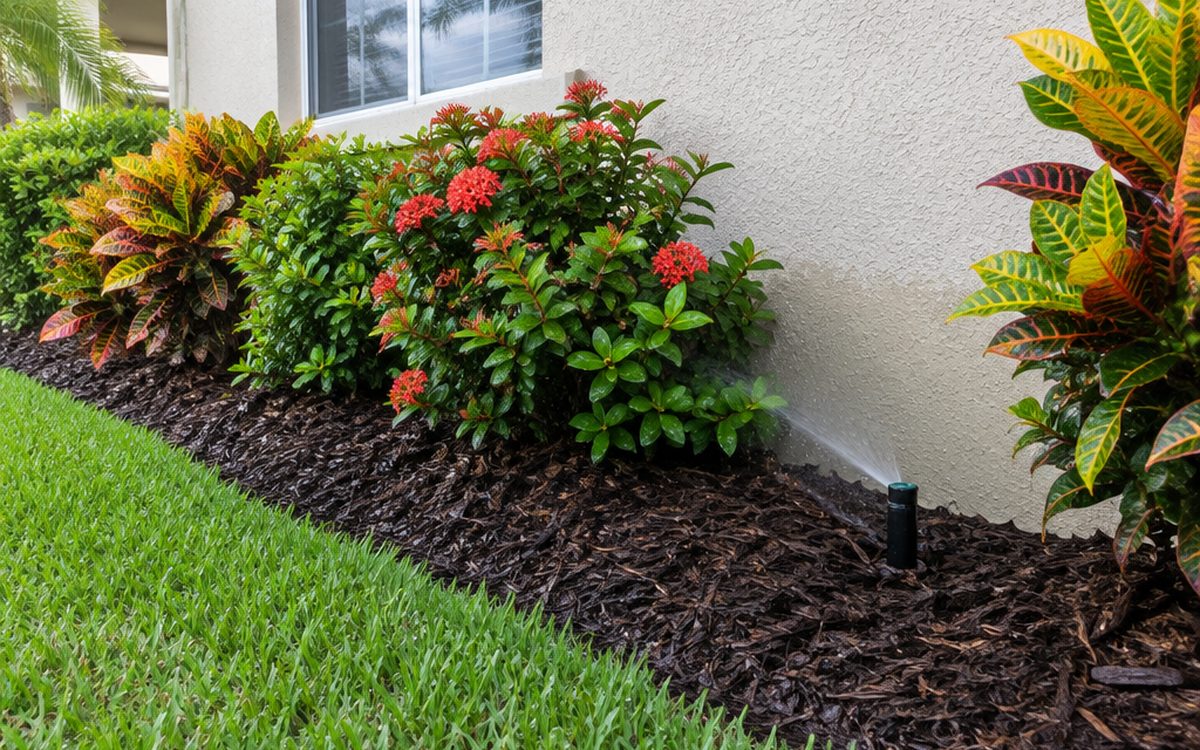
Does mulch attract bugs? Not on its own. Mulch does not call termites or roaches in from down the street. What it does is hold water and give cover, so the bugs already in your yard have a damp, shaded place to live. When that bed is piled against the wall of a Brevard County home, it puts them one step from your slab.
TL;DR
- Mulch is not bait. It is shelter and moisture, and that is what bugs want.
- The problem is where it sits. A thick, wet bed against the wall is the mistake.
- UF/IFAS advises a thin layer, under about 2 inches, within a foot of the foundation.
- Keep about 6 inches of bare wall showing above the soil or mulch so you can see termite mud tubes.
- Keep sprinklers from spraying the wall. Wet mulch on the slab does more harm than the mulch itself.
Why mulch matters to bugs
Mulch does a good job in a Florida yard. It holds water in the soil, keeps roots cool and cuts down on weeds. Those same things are why bugs like it.
Under a deep layer of mulch the soil stays damp and the temperature stays mild. Subterranean termites need that damp soil to survive. Ants nest in it. Roaches, earwigs, millipedes and pillbugs hide in it during the day.
UF/IFAS says mulch does not create a termite problem that was not there. It can help termites that are already in the soil survive near the house, because it keeps the ground moist. In Brevard, subterranean termites are already in the soil in most neighborhoods. So the question is not whether they are there. It is whether you give them a damp, hidden path to your wall.
Does mulch attract bugs into the house, or just the yard?
Mostly the yard, until it touches the house. A mulch bed out by the mailbox is a yard thing. A mulch bed piled up on the slab edge is a house thing.
Here is why. On a block and slab home, the slab edge is where subterranean termites like to come up. A thick bed of mulch there hides the mud tubes they build up the wall. UF/IFAS warns that mulch piled more than about 4 to 6 inches deep can cover the inspection space at the foundation. Then nobody sees the tubes until the damage shows inside.
Ants and roaches work the same way. A palmetto bug or a Florida woods roach lives fine in wet mulch outside. When the mulch runs right up to the wall, the next step is a gap under the door or around a pipe. Our post on what attracts pests to your home covers the other habits that do the same thing.
How far back and how deep to keep mulch
You do not have to tear out your beds. You only have to change the strip next to the house.
- Depth: keep mulch under about 2 inches within 12 inches of the foundation, so the soil there can dry out. That is the UF/IFAS advice.
- Gap: leave about 6 inches of bare wall showing above the soil or mulch line. The Florida building code calls for that inspection space.
- Water: UF/IFAS notes the Florida building code wants irrigation at least 1 foot away from the side of the building. A sprinkler head that soaks the wall every morning keeps that mulch wet all year.
- Old mulch: rake out the old, packed layer before you add new. If you add a fresh layer on top of the old one every year, the bed slowly climbs the wall.
If you like the look of mulch right up to the house, a thin layer is fine. A thick one is the problem.
What we see in Brevard
On Melbourne and Palm Bay block homes, the slab edge is where we look for termite activity first, and a deep mulch bed there is what hides it. During the rainy season, wet mulch on the wall is also one of the reasons palmetto bugs move in from outside. Shrubs and mulch touching the house take longer to treat properly, because the bugs have cover right where we need to work.
None of that means mulch is bad. It means the strip next to the wall is the part to keep dry and open.
What to do now
- Walk around the house. Look at the bottom of every wall. Can you see about 6 inches of bare stucco or block above the mulch? If not, pull it back.
- Check the depth. Push a finger into the bed within a foot of the wall. If it goes past the second knuckle before it hits soil, thin it out.
- Watch the sprinklers. Run them once and see where the water lands. Turn any head that sprays the wall.
- Trim the shrubs. Cut plants back so they do not touch the house. Air and sun keep that strip dry.
- Look for mud tubes. Once the wall is bare, look for thin brown tubes running up from the soil. Our post on termite warning signs shows what they look like.
When to call somebody
If you pull the mulch back and find mud tubes on the wall, call for a termite inspection. If it is just ants or roaches coming in from the beds, our general pest control visit treats the perimeter and the entry points they use to get in. For termites, see our termite control page.
Sources
Frequently Asked Questions
Does mulch attract bugs?
Not on its own. Mulch does not call termites or roaches in from down the street. It holds water and gives cover, so the bugs already in your yard have a damp, shaded place to live.
Does mulch attract termites?
UF/IFAS says mulch does not create a termite problem that was not there. It can help termites already in the soil survive near the house, because it keeps the ground moist.
How far should mulch be from my house?
UF/IFAS advises a thin layer, under about 2 inches, within 12 inches of the foundation, so the soil there can dry out. Leave about 6 inches of bare wall showing above the soil or mulch line so you can see termite mud tubes.
How deep should mulch be near the foundation?
Under about 2 inches within a foot of the wall. UF/IFAS warns that mulch piled more than about 4 to 6 inches deep can cover the inspection space at the foundation.
Should sprinklers spray mulch next to the house?
No. UF/IFAS notes the Florida building code wants irrigation at least 1 foot away from the side of the building. A sprinkler head that soaks the wall keeps that mulch wet all year.
Dealing with this at your place?
Gator Pest Control has served Brevard County since 1994. Free estimates, no contracts.
Get a Free Estimate Call (321) 253-1188