
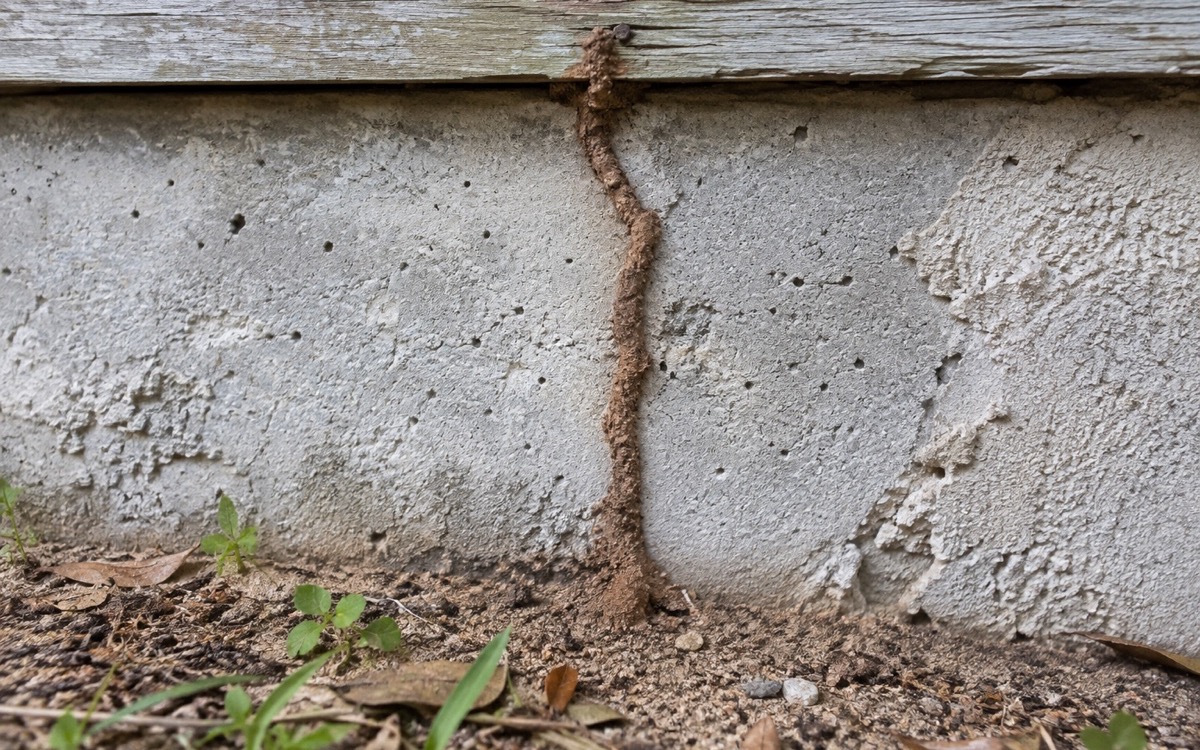
The main termite warning signs in a Brevard County home are mud tubes on foundation walls, small piles of pellets under wood, swarming insects with discarded wings, and wood that sounds hollow when you tap it. Which sign you find tells you which kind of termite you have. That matters, because each kind is treated differently.
TL;DR
- Mud tubes mean subterranean termites. Six-sided pellets mean drywood termites.
- Swarmers and loose wings near a window mean a colony is close, sometimes inside.
- Hollow wood and paint that bubbles with no leak behind it are late signs.
- Do not spray store products on a suspected colony. Identify it first.
- A termite bond only helps if you read what it covers.
Subterranean or drywood: which termite do I have?
Florida has more than one termite, and the signs are different. Subterranean termites live in the soil and travel to your house. Drywood termites live inside the wood and do not need soil at all.
According to UF/IFAS Extension, subterranean termites build tubes from soil, droppings and chewed wood to keep from drying out. You find them on foundation walls, piers, and around garage door frames and slab joints. Their damage follows the grain of the wood.
Drywood colonies have no mud tubes. They push out dry, six-sided pellets, called frass, and the pellets pile up under the infested wood. UF/IFAS says those piles, and small kick-out holes in the wood, are often the only obvious sign.
When do termites swarm in Florida?
Swarmers are the winged termites that leave a colony to start a new one. Subterranean termites mostly swarm in spring, and sometimes a smaller swarm comes in fall, according to UF/IFAS. The same agency lists Asian subterranean termites swarming around early March at dusk, Formosan termites in late April to early May, and West Indian drywood termites around April.
So spring is the season to watch. Termites still feed all year, though. A quiet January does not mean a clear house.
Swarmers are small, about a quarter to three eighths of an inch for subterranean termites. After they land, they shed their wings. A little pile of loose wings on a windowsill or in a spider web is a sign. UF/IFAS notes that people often mistake a flying ant for a termite. If you are unsure, catch a few in a jar and have them identified.
The late signs: hollow wood and bubbling paint
Termites eat wood from the inside and can leave a thin skin on the surface. Tap baseboards, door frames and window sills. A hollow sound is a late sign. So is paint that bubbles or blisters when no water has leaked behind it, and doors or windows that start to stick. Water leaks cause these too, so treat them as a reason to look closer, not as proof.
What we see in Brevard
Most Brevard homes are concrete block with a slab foundation. Termites can reach the wood above the slab through small cracks and gaps, and the signs often hide behind stucco, drywall and trim. Mud tubes tend to show up on the slab edge, inside the garage, and at expansion joints.
Drywood termites are common on the beachside and across the Space Coast, in attics, soffits, window frames and furniture. Humidity stays high most of the year, and that suits both kinds. Snowbird homes are a special case, because a house that sits shut for months can build a problem nobody sees. We cover that in opening a snowbird home.
What to do now
- Look at the slab edge, the garage corners and the door frames for pencil-width mud tubes.
- Check windowsills and the floor under them for wings and pellets.
- Take photos. Do not break open a mud tube and do not spray it, because you may drive the colony somewhere you cannot see it.
- Save a few insects or pellets in a sealed container for identification. UF/IFAS offers help with identification.
- Get a professional termite inspection, then ask what the bond covers.
Why does a termite bond matter in Brevard?
In a warm, wet climate, waiting until you see termites is a poor plan. A bond is a written agreement that the company will inspect and stand behind its treatment for a set time. Read the terms. UF/IFAS warns that some companies exclude Formosan and Asian subterranean termites from warranties, and that many will not cover a home with spray foam insulation, because it hides the wood from inspection.
Our termite control page explains how a trench and treat barrier and our 10 year bond work.
When to call somebody
Call a professional if you find mud tubes, a pile of pellets, or a swarm inside the house. These do not go away by themselves. An inspection tells you which termite you have before anyone treats. Termite work is quoted separately from our plans on the pricing page, and you can reach us any time through the contact page.
Sources
- UF/IFAS Extension: Termite Prevention and Control
- UF/IFAS News: As Florida enters termite swarm season
- UF/IFAS Extension: Drywood Termite, Cryptotermes cavifrons
Frequently Asked Questions
What are the first termite warning signs in a Florida home?
Mud tubes on foundation walls, small piles of six-sided pellets under wood, swarming insects with discarded wings, and wood that sounds hollow when you tap it.
How do I tell subterranean termites from drywood termites?
Subterranean termites live in the soil and build mud tubes. Drywood termites live inside the wood, build no mud tubes, and leave dry six-sided pellets called frass.
When do termites swarm in Florida?
Subterranean termites mostly swarm in spring, with a smaller swarm sometimes in fall, according to UF/IFAS. Asian subterranean termites swarm around early March, Formosan termites in late April to early May, and West Indian drywood termites around April.
Should I spray termites myself?
No. Do not break open a mud tube or spray it, because you may drive the colony somewhere you cannot see it. Identify the termite first, then get a professional inspection.
What should I check in a termite bond?
Read the terms. UF/IFAS warns that some companies exclude Formosan and Asian subterranean termites from warranties, and that many will not cover a home with spray foam insulation.
Dealing with this at your place?
Gator Pest Control has served Brevard County since 1994. Free estimates, no contracts.
Get a Free Estimate Call (321) 253-1188