
Why are my rat traps not catching rats? Most of the time it is one of three things: the rats are wary of the new trap, the trap is in the wrong spot, or they have better food somewhere else. In a Brevard County home, with roof rats in the attic, a few small changes usually get the traps working again.
TL;DR
- Rats avoid new things. UC IPM says they can stay away from a new trap for days, sometimes weeks, and roof rats are the most cautious.
- Roof rats run high. A trap in the middle of the floor gets ignored. A trap on their path, against a wall or a beam, gets used.
- Too much bait lets a rat lick it off without setting off the trap. A pea sized bit is enough.
- If there is pet food, bird seed or fruit on the tree, your bait has to compete with it.
- Traps only catch the rats already inside. If the way in is still open, new ones keep coming.
Why rats avoid a new trap
Rats are careful about anything new in their space. Experts call it new object shyness. A trap that showed up last night is something to walk around, not something to eat from. UC IPM says this shyness is stronger in roof rats than in Norway rats, and roof rats are the rat we deal with most on the Space Coast. If you are not sure which one you have, our post on roof rat vs Norway rat vs mouse shows how to tell.
The fix is to let them get used to it. UC IPM suggests leaving the traps baited but not set until the rats have taken the bait a few times. Then set them, with fresh bait.
Why your rat traps are not catching rats in the right spot
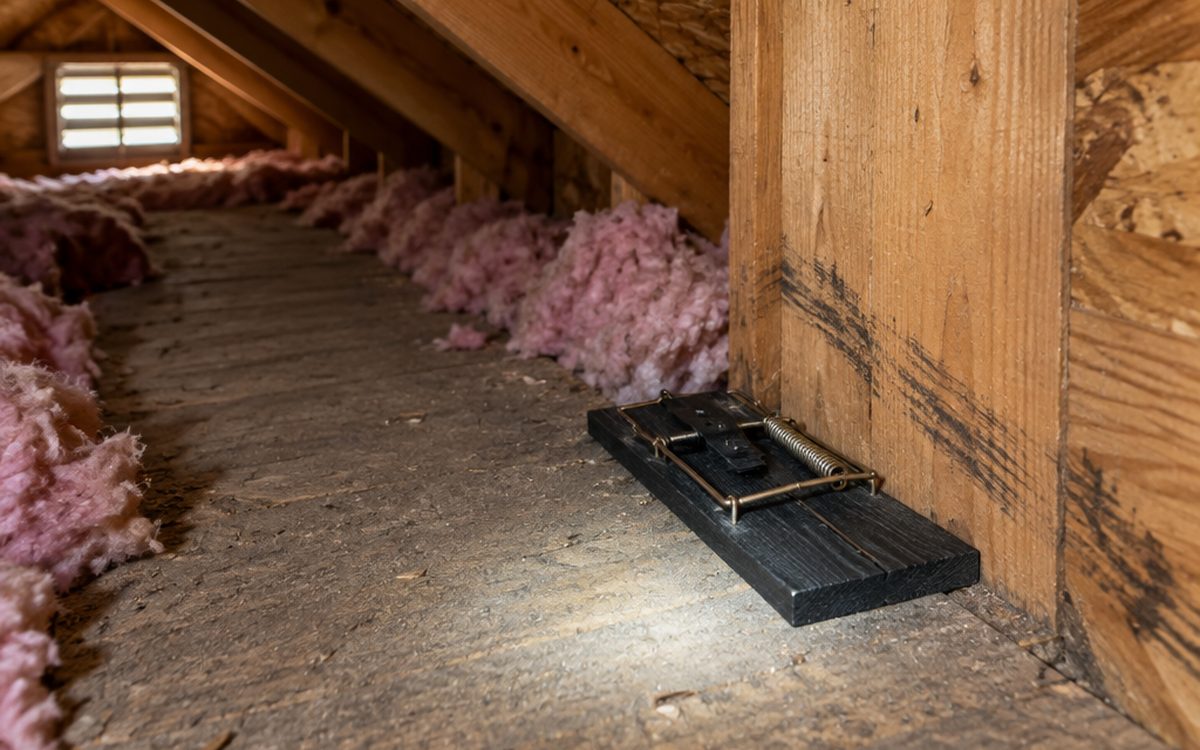
Rats do not cross open floor if they can help it. They run along walls, beams and pipes, where they can feel an edge. Roof rats also climb, so in a Florida attic their path is often up on a truss, the top of a wall or along the soffit edge.
A few placement rules that make a real difference:
- Set the trap on the path, not near it. Look for droppings, dark rub marks on wood, or tracks in the insulation. That is the road.
- Trigger end against the wall. The rat walks along the wall and steps right onto it.
- Go off the ground for roof rats. UC IPM says to set them up high, on ledges, beams or fence tops, where roof rats travel.
- Use more traps than you think. UC IPM says a home with a lot of activity can need a dozen or more, about 10 to 20 feet apart.
The bait and the trap itself
Big globs of bait work against you. A rat can lick around the edges and leave without enough weight on the trigger. Use a pea sized amount, pressed into the trigger. UC IPM lists nuts, dried fruit, bacon, dry pet food and peanut butter as baits that work.
Size matters too. A mouse trap is too small for a rat. It snaps, the rat gets loose, and now it knows to stay away from traps. Use traps sold for rats.
Last, look at what else is on the menu. If the dog food stays out in the garage, the bird feeder is full, or the orange tree is dropping fruit, a trap with a dab of bait is not much of a draw. We wrote about this in the bird feeder post and in do citrus trees attract rats.
What we see in Brevard
On the Space Coast the rodent call is almost always roof rats. They come in over the top of the house, along a palm frond that touches the roof or through a gap where the soffit meets the fascia.
That is the part traps cannot fix. You can catch three rats this week, and if that gap is still open, the next ones use it next week. It feels like the traps stopped working. Really the traps are working, and the house keeps letting new rats in. That is why our rodent control work starts with sealing the way in, then trapping, then checking back, then cleanup.
What to do now
- Find the path. Look for droppings, rub marks and tracks in the attic or garage. Put traps right on it, trigger end against the wall or beam.
- Pre-bait. Leave the traps baited and unset for a few nights. Once the bait is being taken, set them.
- Use less bait and bigger traps. Pea sized bait, rat sized snap traps, and more of them than feels needed.
- Take away the easy food. Bring pet food and bird seed inside and pick up fallen fruit.
- Keep traps away from kids and pets, and check them every day.
When to call somebody
If the traps have been set right for a couple of weeks and you still hear noise at night, or you keep finding fresh droppings, the rats have a way in that is still open. Our rodent inspection is free, rodent work is quoted after the inspection, and there is no contract.
Sources
Frequently Asked Questions
Why are my rat traps not catching rats?
Most of the time it is one of three things: the rats are wary of the new trap, the trap is in the wrong spot, or they have better food somewhere else.
How long do rats avoid a new trap?
UC IPM says rats can stay away from a new trap for days, sometimes weeks, and roof rats are the most cautious. Leave the traps baited but not set until the rats have taken the bait a few times, then set them.
Where should I put rat traps in the attic?
On the path the rats use, with the trigger end against the wall or beam. Look for droppings, dark rub marks and tracks in the insulation. For roof rats, set traps up high on ledges or beams, and use more than you think, about 10 to 20 feet apart.
How much bait should I put on a rat trap?
A pea sized amount pressed into the trigger. Too much bait lets a rat lick around the edges without setting off the trap.
Why do I keep catching rats but they keep coming back?
Traps only catch the rats already inside. If the gap they came in through is still open, new rats use it. Sealing the way in comes first, then trapping.
Dealing with this at your place?
Gator Pest Control has served Brevard County since 1994. Free estimates, no contracts.
Get a Free Estimate Call (321) 253-1188