
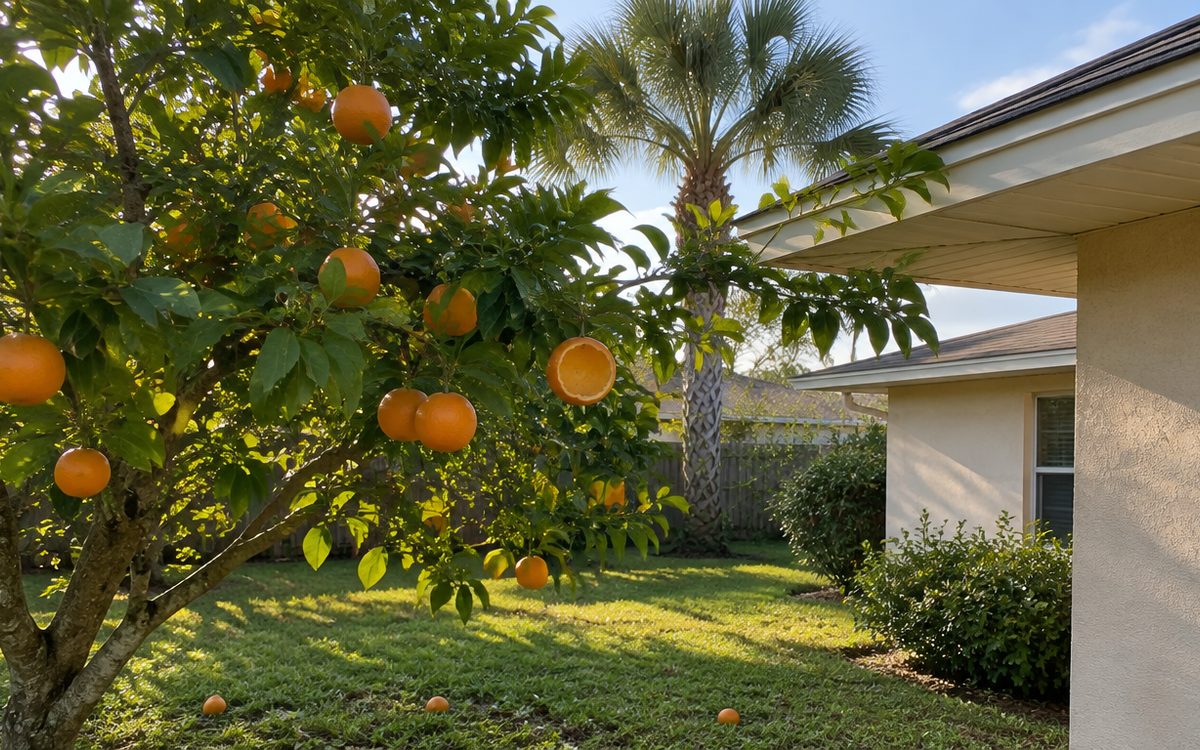
Yes. Citrus trees attract rats, and in Brevard County the rat is almost always the roof rat. Fruit is easy food, the tree is a safe place to sit and eat, and a limb over the roof is a road to the attic. The tree is not the real problem. The problem is when the tree feeds a rat that sleeps in your house.
TL;DR
- Roof rats eat citrus right on the tree. A hollow orange with the rind still hanging is the classic sign.
- Fallen fruit on the ground feeds them every night. Pick it up.
- Roof rats can travel 300 feet or more for food, so the tree may be yours and the rat may live next door, or the other way round.
- Limbs that touch the roof are the bridge from the tree to the attic. Cut them back.
- Hollow fruit plus droppings or noise in the ceiling means a rat is inside. That calls for an inspection, not just a cleanup.
How to tell a rat has been in your citrus
A squirrel tears fruit open and drops pieces. A roof rat is neater. It chews a small hole in a ripe orange, eats the inside and leaves the empty rind hanging on the branch. The UC IPM roof rat guide describes exactly that: hollowed out rinds left on the tree. On lemons it is often the other way. The rat eats the rind and leaves the fruit.
Other signs around the tree:
- Gnaw marks on fruit lying in the grass.
- Droppings under the tree or along the top of the fence.
- Rub marks or a worn path along a fence rail or a limb.
- Movement at dusk on a wire or fence top. Roof rats run those like sidewalks.
You will see most of this in fall and winter, when the fruit ripens. That is also when roof rats start looking for a warm place indoors.
Why citrus trees attract rats to the house
Roof rats live up high. They nest in trees, thick shrubs and palm fronds, then come down to feed. UC IPM says they prefer fruit, nuts and berries, and that they hold on to a nest site. If the nest stays, the rats come back.
A citrus tree gives them food and cover in one spot. A limb that rests on the roof gives them the next step. From the roof, the way in is a gap at the soffit, a roof pipe boot or an AC line hole. UC IPM says to seal any hole larger than a quarter inch, and to plug openings above the ground too, because roof rats climb so well.
So the tree on its own is a yard problem. The tree touching the roof is a house problem. Our post on noises in the attic at night covers what that sounds like once they are in.
What to do with the tree
You do not need to cut down the tree. Most of the fix is cleanup.
- Pick up fallen fruit every day or two. Bag it and put it in a can with a lid.
- Pick ripe fruit. Do not leave the last of the crop hanging into spring.
- Cut limbs back from the roof. UC IPM says to remove limbs that hang within 6 feet of the roof.
- Keep the tree off the fence and the wires. A limb that touches a fence is another road in.
- Thin the vines. Ivy and jasmine on a fence or a wall make good cover for a nest.
While you are out there, look at the rest of the yard. Dead palm fronds, a bird feeder and pet food outside all feed the same rats. The bird feeder post goes into that.
What we see in Brevard
Citrus is in a lot of backyards on the Space Coast, often next to a cabbage palm and an oak that hangs over the roof. That mix is ideal for roof rats. They nest in the palm fronds, eat the oranges and walk the limbs onto the roof. Around here people call the roof rat the citrus rat or the fruit rat for a reason. Folks often blame the squirrels for the hollow oranges. When there are droppings in the attic too, it is a rat.
What to do now
- Walk the tree. Look for hollow fruit still on the branches and gnawed fruit on the ground.
- Clean up the fallen fruit and keep it cleaned up through the season.
- Trim every limb that touches or hangs over the roof, the fence or a wire.
- Check the roofline above the tree for gaps at the soffit and around pipes.
- Listen at night. Scratching in the ceiling after dark means a rat may already be inside.
When to call somebody
If you only see hollow fruit, start with the cleanup and the trimming. If you also find droppings in the attic or the garage, or hear noise at night, a rat is living in the house. Sealing the gaps before the rats are out can trap them inside, so get it looked at first. Our rodent inspection is free. Rodent work is quoted after the inspection, separate from the general pest plans, with no contract.
Sources
Frequently Asked Questions
Do citrus trees attract rats?
Yes. In Brevard County the rat is almost always the roof rat. Fruit is easy food, the tree is a safe place to sit and eat, and a limb over the roof is a road to the attic.
How do I know if rats are eating my oranges?
A roof rat chews a small hole in a ripe orange, eats the inside and leaves the empty rind hanging on the branch. On lemons it often eats the rind and leaves the fruit. Gnawed fruit on the ground, droppings under the tree and rub marks on a fence rail are other signs.
Do I need to cut down my citrus tree to stop rats?
No. Most of the fix is cleanup. Pick up fallen fruit every day or two, pick ripe fruit, cut back limbs that hang within 6 feet of the roof, and keep the tree off the fence and the wires.
Can rats in my citrus tree get into my attic?
Yes, when a limb touches the roof. From the roof a roof rat gets in at a gap at the soffit, a roof pipe boot or an AC line hole. Hollow fruit plus droppings or noise in the ceiling means a rat is inside, and that calls for an inspection.
Dealing with this at your place?
Gator Pest Control has served Brevard County since 1994. Free estimates, no contracts.
Get a Free Estimate Call (321) 253-1188