
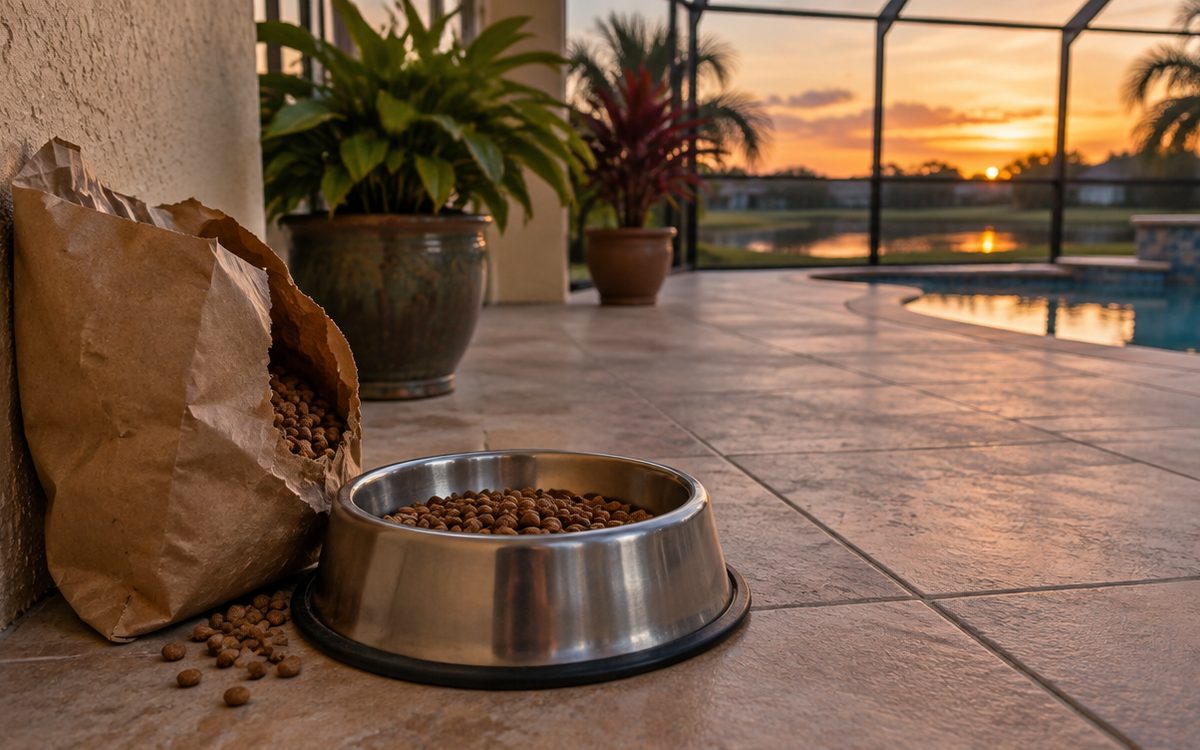
Yes, pet food attracts rats. Dry kibble is packed with fat and protein, it sits out in a bowl, and the bag usually lives in the garage where a rat can reach it. In Brevard County, a bowl left out overnight or a paper bag on a shelf is often the easiest meal on the block.
TL;DR
- Rats eat pet food the same way they eat birdseed and fallen fruit. It is food, and it is easy.
- The bowl left out at night is the biggest problem. Rats feed at night.
- A paper or thin plastic bag is not storage. Rats chew through it.
- Feeding a pet, or a stray cat, outside feeds ants, roaches and rats too.
- A hard bin with a tight lid and a bowl that comes in at night fix most of it.
Why does pet food attract rats?
Rats are not picky. They eat what is close, safe to reach and worth the trip. Pet food checks every box. A dry kibble is made to be a full meal for an animal, so it is a full meal for a rat as well. It does not spoil fast, and a rat can carry pieces away and stash them.
Pet food is also predictable. It is in the same spot every day, often next to the house, often outside or in the garage. A roof rat that finds a bowl on the lanai will come back the next night, and the night after that.
It is not only the rats. A bowl outside pulls in ants within hours, and roaches come for the crumbs and the water bowl. We wrote about the bigger list of yard habits in our post on what attracts pests to your home. Pet food is near the top of it.
The bowl, the bag and the backyard
Most of the problem comes from three places.
The bowl left out at night. Rats do most of their feeding after dark. The CDC says to put pet food away after use and not to leave food or water bowls out overnight. If your dog or cat eats on the lanai, pick up the bowl when the meal is done.
The bag in the garage. A 30 pound bag of kibble on a garage shelf is a buffet. Rats chew into paper and thin plastic with no trouble. The CDC says to keep food sealed in thick plastic, metal or glass containers with tight lids. A metal can or a heavy plastic bin with a locking lid works. Keep birdseed and grass seed in the same kind of bin. Our post on keeping rats out of your garage covers the door seal and the other gaps.
Feeding outside. Outdoor cats, an automatic feeder on the porch, or a dish set out for the neighborhood strays all put food out after dark. That food feeds whatever finds it first. If you feed outside, feed at set times and pick up what is left.
Does a pet in the house keep rats away?
Not really. A cat may catch a mouse now and then, but a cat does not seal a soffit gap or move a bag of kibble. Plenty of homes with a dog or a cat still get rats, because the pet food is the reason the rats came.
What a pet does change is how you handle the fix. If you have rodents, do not put poison where a pet can reach it, and do not put a bait block out in the yard. Pets and kids find bait. We explain why in our post on rat poison in the attic.
What we see in Brevard
Across Brevard, from Palm Bay up to Titusville, a lot of homes have a garage that doubles as a pantry. The dog food, the birdseed and the extra groceries all sit on open shelves near the door. When the rubber seal at the bottom of the garage door wears out, that shelf is the first thing a rat finds.
The other common one is the lanai. A screen is there for bugs, not rats. Roof rats are good climbers, and a torn panel or a gap at the screen door is enough. A food bowl and a water bowl inside the screen give them both things they need in one spot.
What to do now
- Bring the bowls in at night. Food and water both. Wash the bowl so crumbs do not build up.
- Move every bag into a hard bin with a tight lid. Pet food, birdseed and grass seed. Metal or thick plastic.
- Clean under the shelf. Spilled kibble on the garage floor feeds rats as well as a full bowl does.
- Feed outdoor pets at set times. Pick up what is left after 20 or 30 minutes.
- Look for signs. Chewed bags, droppings near the food, or a gnawed corner on a bin. Those mean a rat has already found it.
When to call somebody
If you see droppings near the pet food, chewed bags or bins, or you hear scratching in the attic at night, a rat has already moved past the bowl. Sealing the food helps, but it will not move a rat that is already living in the house. Our rodent control service starts with a free rat inspection, and every plan is on the pricing page.
Sources
Frequently Asked Questions
Does pet food attract rats?
Yes. Dry kibble is packed with fat and protein, it sits out in a bowl, and the bag usually lives in the garage where a rat can reach it. A bowl left out overnight or a paper bag on a shelf is often the easiest meal on the block.
Should I leave my pet's food bowl out at night?
No. Rats do most of their feeding after dark. The CDC says to put pet food away after use and not to leave food or water bowls out overnight. Pick up the bowl when the meal is done.
How should I store pet food to keep rats out?
Rats chew into paper and thin plastic with no trouble. The CDC says to keep food sealed in thick plastic, metal or glass containers with tight lids. A metal can or a heavy plastic bin with a locking lid works, and birdseed and grass seed belong in the same kind of bin.
Will having a cat or dog keep rats away?
Not really. A cat may catch a mouse now and then, but a cat does not seal a soffit gap or move a bag of kibble. Plenty of homes with a dog or a cat still get rats, because the pet food is the reason the rats came.
Dealing with this at your place?
Gator Pest Control has served Brevard County since 1994. Free estimates, no contracts.
Get a Free Estimate Call (321) 253-1188