
The difference between an exterminator and pest control is mostly the approach. An exterminator usually means someone who comes out and kills what is there today. Pest control usually means killing what is there and then working out why it got in, so it does not come back. In Florida both need the same state license, so the name on the truck tells you less than the questions you ask.
TL;DR
- "Exterminator" is the older word. It means kill the pests you have now.
- "Pest control" is the broader word. It means treat, then prevent.
- In Florida there is no separate exterminator license. Any company that treats your home for pay needs a license from the state.
- Most real problems need both: a treatment now and a fix for the way they got in.
- Ask what happens on the visit. That tells you more than the word they use.
Where the two words came from
For most of the last century, anyone who treated a house for bugs or rats was called an exterminator. The job was simple to describe. Come in, spray or bait, leave.
Over time the trade started to look harder at the reasons pests show up. Gaps in the block, a drip under the sink, mulch piled against the wall, a tree limb on the roof. That wider job got the name pest control, and the industry calls the method integrated pest management. It means you use the smallest treatment that works and fix the conditions that let pests in.
Plenty of people still say exterminator, and that is fine. The word is not the problem. A visit that only sprays and never looks at the cause is the problem.
The difference between an exterminator and pest control in Florida
Here is the part most articles leave out. In Florida, the word on the sign has no legal meaning.
Under Chapter 482 of the Florida Statutes, a business that does pest control for pay must hold a license from the Florida Department of Agriculture and Consumer Services. Each location must have a certified operator in charge, and that person must be certified in every category the company works in. The state certifies in a few categories: general household pests, termites and other wood destroying organisms, lawn and ornamental, and fumigation.
So a company that calls itself an exterminator and one that calls itself pest control are held to the same law. What you want to know is which categories they are licensed for and what they actually do on the visit.
What each kind of visit looks like
A kill only visit, the old exterminator style:
- Spray inside and maybe around the outside
- Set bait or traps where the pests showed up
- No walk around the house, no notes on how they got in
- One visit, and a call back if it fails
A pest control visit:
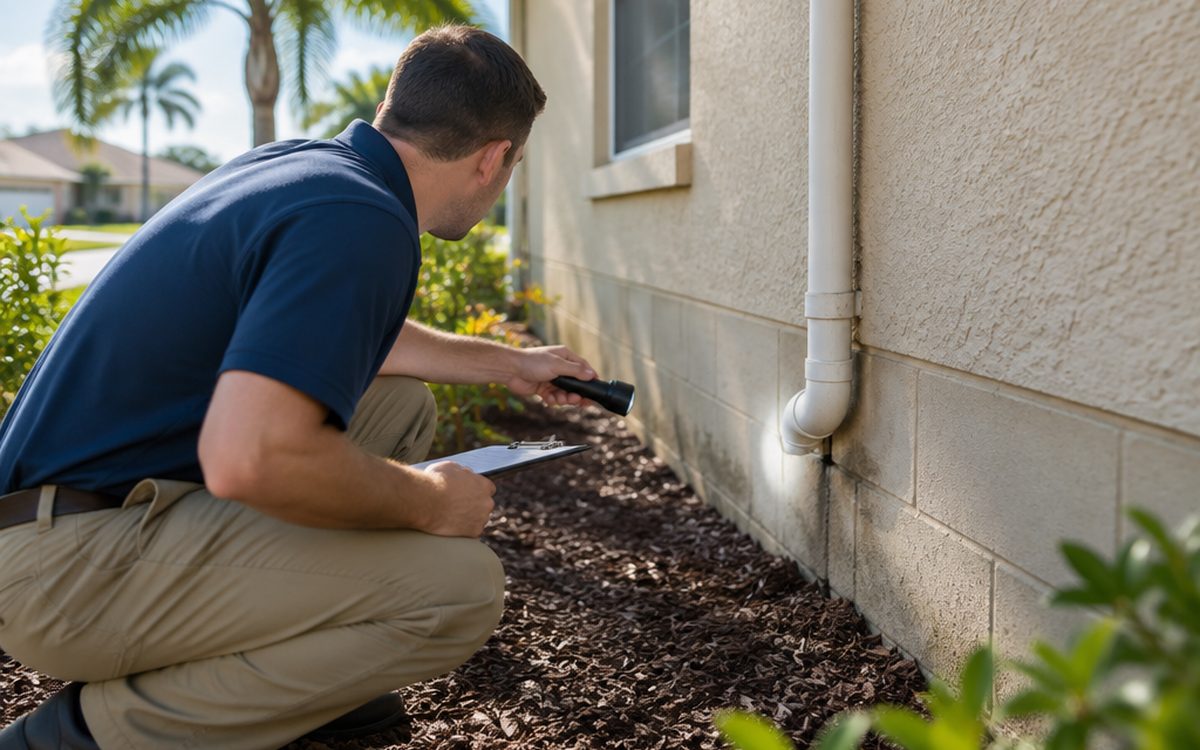
- Walk around the outside first and look at entry points, gaps and moisture
- Treat the perimeter and the inside spots where activity shows up
- Tell you what is drawing the pests in and what you can change
- Come back on a schedule, because Florida pests do not take the winter off
Neither one is wrong for every case. A single wasp nest by the door does not need a plan. A roach problem in the kitchen or ants that keep coming back after every rain almost always does. We wrote more about that in one time treatments versus long term prevention.
What we see in Brevard
Gator Pest Control holds Florida license JB5078. It covers general household pests, lawn and ornamental pests, and wood destroying organisms such as termites. That is the license number you should be able to get from any company, before they treat anything.
It also matters what a company does not do. We do general pest, termites and rodents. We do not trap wildlife, so for a raccoon or a squirrel we tell people to call a licensed wildlife trapper. An honest company will tell you when the job is not theirs.
What to do now
- Ask for the license number. The state has a public lookup, and a real company gives it to you without a fuss.
- Ask which categories it covers. Termite work needs the wood destroying organisms category.
- Ask what happens on the first visit. Listen for "inspect" and "entry points", not only "spray".
- Ask how they bill. Per visit with no contract, or a signed term. Our contract post covers what to check.
- Ask what you can fix yourself. A good technician will tell you.
When to call somebody
If you see one bug, you may not need anyone. If you keep seeing them, the problem has a cause, and that cause is what a pest control visit should find. Our general pest control covers ants, roaches, spiders and the other everyday crawling bugs, and the pricing page lists every plan up front with no contracts. Call and tell us what you are seeing.
Sources
Frequently Asked Questions
What is the difference between an exterminator and pest control?
It is mostly the approach. An exterminator usually means someone who kills what is there today. Pest control usually means killing what is there and then working out why it got in, so it does not come back.
Does Florida license exterminators separately from pest control companies?
No. Under Chapter 482 of the Florida Statutes, any business that does pest control for pay must hold a license from the Florida Department of Agriculture and Consumer Services, whatever it calls itself. Each location must have a certified operator in charge.
What license categories does Florida have for pest control?
The state certifies in general household pests, termites and other wood destroying organisms, lawn and ornamental, and fumigation. Termite work needs the wood destroying organisms category.
What should a pest control visit include?
A walk around the outside to look at entry points, gaps and moisture, treatment of the perimeter and the inside spots where activity shows up, advice on what is drawing pests in, and return visits on a schedule.
How do I check a pest control company before I hire it?
Ask for the license number and look it up with the state, ask which categories it covers, ask what happens on the first visit, and ask how they bill.
Dealing with this at your place?
Gator Pest Control has served Brevard County since 1994. Free estimates, no contracts.
Get a Free Estimate Call (321) 253-1188