
The Asian subterranean termite is an invasive termite from tropical Asia, and a University of Florida study published in February 2026 says it is now established as far north as Brevard County. It lives in the soil like the termites we already have, and UF/IFAS calls it a very damaging one. For most homes on the Space Coast, the answer is the same as it has always been: a soil barrier, a yearly inspection, and a close look at the slab edge.
TL;DR
- UF/IFAS found the Asian subterranean termite established in Brevard County on the east coast and Hillsborough County on the Gulf side.
- It is a subterranean termite. It comes up from the soil, not from inside dry wood.
- Fumigation, the tent you see over houses, does not stop it in a building. It needs a ground based treatment.
- People move it. Boats and infested wood have carried it to new places.
- Current treatments still work. The risk is not checking.
What is the Asian subterranean termite?
Its scientific name is Coptotermes gestroi. The first infestation in the United States was found in Miami in 1996, according to UF/IFAS. For years people thought it would stay in South Florida because it needs a warm climate.
It is a close cousin of the Formosan termite, the one people call the super termite. Both live in the soil. UF/IFAS describes it as a very damaging termite and a threat to wooden structures wherever it occurs.
It is not a drywood termite. Drywood termites live inside the wood and push out little pellets. This one travels from the soil, through cracks, and up into the house. That difference decides how it is treated.
Asian subterranean termites in Brevard County: what the study found
The study came out of the University of Florida and was published in the Journal of Economic Entomology. Researcher Thomas Chouvenc and his team looked at the UF Termite Collection records from 1990 to 2025. Many of those samples came from pest control companies across the state that send termites in to be identified.
What they found:
- The Asian subterranean termite is established as far north as Brevard County on the east coast and Hillsborough County, around Tampa, on the Gulf coast.
- They expect it in all 24 of Florida's southernmost counties before 2040.
- The Formosan termite is already in most coastal counties and most big cities, and is likely to be found statewide before 2050.
The researchers also said the spread was missed for years because reporting was patchy. Subterranean termites are hard to see, so damage is often far along before anyone notices.
How did it get here, and how do I keep it out?
In Key West, UF/IFAS tracked this termite for more than 20 years. They found it was not spreading by swarms alone. Infested boats moved it around the island. That matters on the Space Coast, where many homes near the Indian River and the Banana River have a boat in the yard or a dock out back.
Because it comes from the soil, the house needs protection at the soil. UF/IFAS says fumigation does not control it in a building. That is the same reason we use a trench and treat barrier all the way around the foundation for subterranean termites. A news report from WUSF quoted UF researchers saying current treatments still work, and that regular inspections are the key.
What we see in Brevard
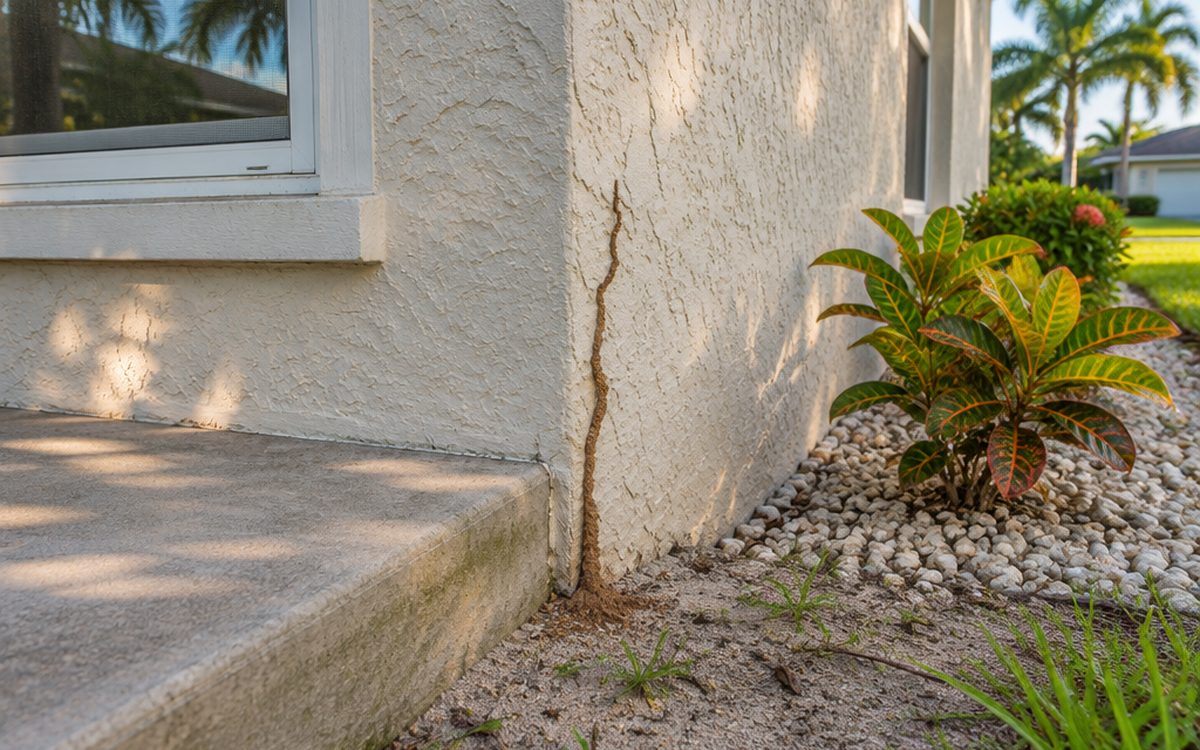
Most homes here are concrete block on a slab. Subterranean termites reach the wood above the slab through small cracks, the slab edge, and expansion joints. Mud tubes tend to show up along the slab edge, inside the garage, and at those joints. The signs often hide behind stucco, drywall and trim.
None of that changes with a new species. It is the same places to look. We wrote about the signs in detail in our termite warning signs post, including how to tell a flying ant from a termite swarmer.
What to do now
- Walk the outside of the house. Look along the slab edge and the garage corners for mud tubes about the width of a pencil.
- Check windowsills for small piles of loose wings, all the same length. Those are swarmers.
- If you keep a boat, look over any wood on the boat, the trailer and the dock now and then.
- Do not stack wood, lumber or old boat parts against the house.
- If you already have a termite bond, keep the yearly inspection. If you do not, have the house looked at.
When to call somebody
If you see mud tubes, wings inside, or a swarm in the house, call for an inspection before you spray anything. A store spray kills the termites you can see and leaves the colony. If you want the samples identified by species, a pest control company can send them to UF. Our termite protection comes with a 10 year bond, and you can see what is included on our pricing page.
Sources
- University of Florida News: invasive termites spreading farther than predicted (Feb 2026)
- UF/IFAS: spread of Asian subterranean termites through Key West (2023)
- WUSF: new termite species could be spreading throughout Florida (Jun 2026)
Frequently Asked Questions
Is the Asian subterranean termite in Brevard County?
Yes. A University of Florida study published in February 2026 found the Asian subterranean termite established as far north as Brevard County on the east coast and Hillsborough County on the Gulf coast.
Is the Asian subterranean termite the same as a drywood termite?
No. It is a subterranean termite. It travels from the soil, through cracks, and up into the house. Drywood termites live inside the wood and push out little pellets.
Does tenting a house kill Asian subterranean termites?
No. UF/IFAS says fumigation does not control this termite in a building. It needs a ground based treatment at the soil, like a trench and treat barrier around the foundation.
How does the Asian subterranean termite spread?
People move it. In Key West, UF/IFAS found infested boats carried it around the island, not just swarms.
Do current termite treatments still work on it?
Yes. UF researchers say current treatments still work, and that regular inspections are the key.
Dealing with this at your place?
Gator Pest Control has served Brevard County since 1994. Free estimates, no contracts.
Get a Free Estimate Call (321) 253-1188