
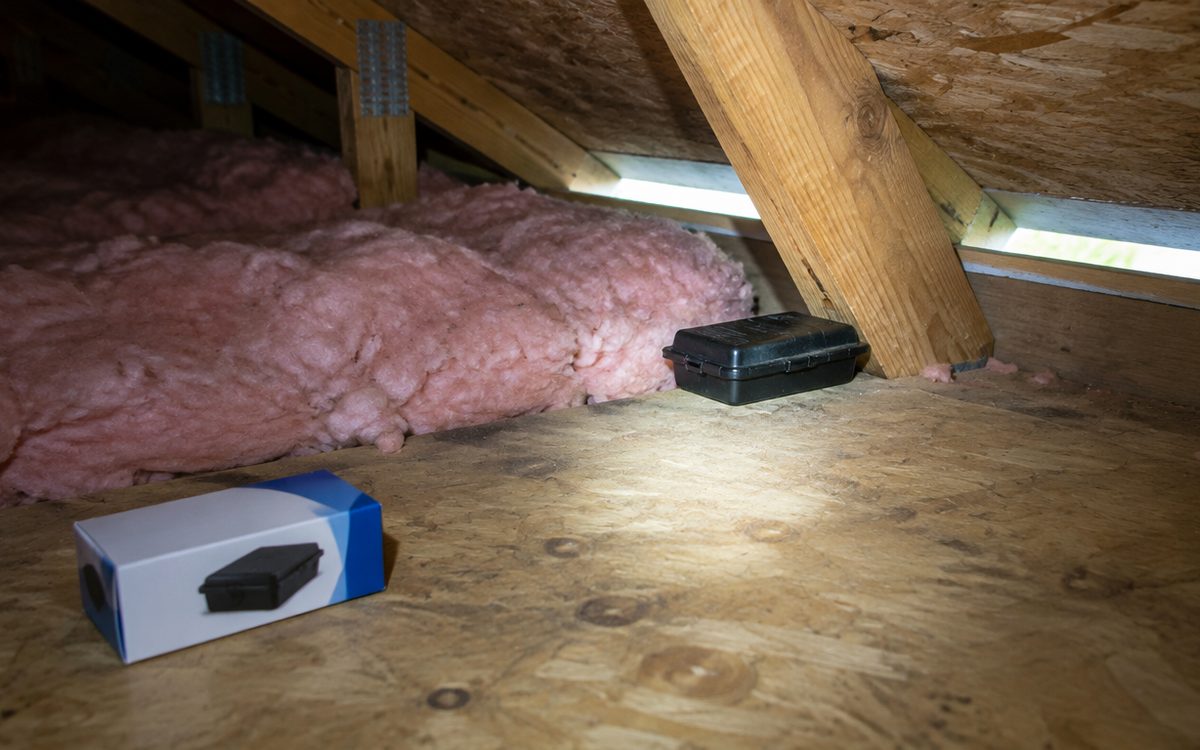
Should I use rat poison in my attic? Usually, no. Poison kills slowly, so the rat often dies inside a wall or under the insulation where you cannot get to it. It also does nothing about the hole the rat came in through. In a Brevard County home, sealing the way in and trapping what is inside works better.
TL;DR
- A rat that eats bait does not drop on the spot. It can take days, and it goes where it feels safe. In your house, that is often a wall.
- A dead rat you cannot reach can smell for weeks and draw flies.
- Poison does not close the gap. New rats use the same hole.
- Bait can harm dogs, cats and the owls and hawks that eat rats.
- The order that works: find the way in, seal it, trap what is left, then clean up.
Why is rat poison in my attic a bad idea?
Most rat bait is an anticoagulant. That means it stops the blood from clotting. The rat eats it, feels fine for a while, and keeps moving. It can take several days to die. A sick rat does not walk out to the yard to do it. It crawls somewhere dark and tight, like a wall cavity, a soffit, or deep under attic insulation.
A dead rat in a wall is hard to find and harder to reach. Sometimes the only way to it is through the drywall. Until it is gone, you get the smell, and then the flies.
Poison also only works on the rats that eat enough of it. If there is a bird feeder, pet food in the garage, or fruit on the tree, a rat has better food than your bait. We wrote about that in the bird feeder post.
What the rules say about rat bait
The EPA sets the rules for rat bait sold at the store. Consumer products must come as a ready to use bait station with block or paste bait inside. Loose pellets are not allowed for home use.
The strongest baits are not sold to homeowners at all. The EPA lists four of them, brodifacoum, bromadiolone, difenacoum and difethialone, as registered only for licensed pest control. The reason it gives is that they pose a greater risk to animals that were never the target. That includes animals that eat a poisoned rat.
University of New Hampshire Extension reported necropsies where 34 of 35 wild animals tested had rodenticide in them. A rat full of bait is slow and easy to catch, and a barn owl or a neighbor's cat does not know the difference.
If you have dogs, cats or small kids, that is one more reason to keep bait out of the house. Our post on whether pest control is safe for pets and kids covers how we place products in a home with both.
What works better than poison
Think of it as three jobs, in order.
- Close the way in. Every rat in your attic came through a gap. Until that gap is sealed, removing rats is a job that never ends. Our post on how small a hole a rat can get through shows how little room they need.
- Trap what is inside. Snap traps, set along the walls and the edges of the attic, where rats run. A trapped rat is a rat you can find and remove.
- Clean up. Droppings, urine and fouled insulation stay behind after the rats are gone. That is part of the job, not an extra.
This is the order we use on every rodent control job: seal the house, set traps, monitor, and clean up.
What we see in Brevard
On the Space Coast the rodent call is almost always roof rats. They climb. They come in over the top of the house, along a palm frond touching the roof or through a gap where the soffit meets the fascia. On a block home, the gaps around the AC line and the plumbing are the other easy door.
Poison never touches that. You can put out bait for months and the gap stays open. Next week's rats use the same hole as last week's. That is why we start outside, at the way in, and not in the attic with a box of bait.
What to do now
- Do not put bait in the attic or the walls. If you already did, note where, so it can be picked up.
- Walk the outside of the house. Look at the roof line, the soffit corners, the AC line and the plumbing where they enter the wall. Look for chewed edges or dark rub marks.
- Cut back palm fronds and limbs that touch the roof.
- Take away the easy food. Bring pet food and bird seed inside, and pick up fallen fruit.
- If you set traps yourself, use snap traps along the walls, out of reach of kids and pets, and check them every day.
When to call somebody
If you hear the noise every night, or you find droppings in more than one spot, the rats have a way in that is working well for them. Finding that gap is most of the job, and it is easy to miss from the ground. A rodent inspection from us is free, and we will tell you plainly what we find.
Sources
- EPA: Restrictions on Rodenticide Products
- University of New Hampshire Extension: Wildlife-Safe Alternatives to Harmful Rodent Poisons
Frequently Asked Questions
Should I use rat poison in my attic?
Usually not. Most rat bait kills slowly, so the rat often dies inside a wall or under the insulation where you cannot reach it. Poison also does nothing about the gap the rat came in through. Sealing the way in and trapping what is inside works better.
What happens when a rat dies in the wall after eating poison?
A dead rat in a wall is hard to find and harder to reach. Sometimes the only way to it is through the drywall. Until it is gone, you get the smell, and then the flies.
Can I buy the strongest rat poisons at the store?
No. The EPA lists four of the strongest baits, brodifacoum, bromadiolone, difenacoum and difethialone, as registered only for licensed pest control, because they pose a greater risk to animals that were never the target. Store products must come as a ready to use bait station with block or paste bait, not loose pellets.
What works better than rat poison for roof rats?
Three jobs, in order. Close the way in, trap what is inside with snap traps along the walls, then clean up the droppings and fouled insulation. That is the order we use on every rodent control job.
Dealing with this at your place?
Gator Pest Control has served Brevard County since 1994. Free estimates, no contracts.
Get a Free Estimate Call (321) 253-1188