
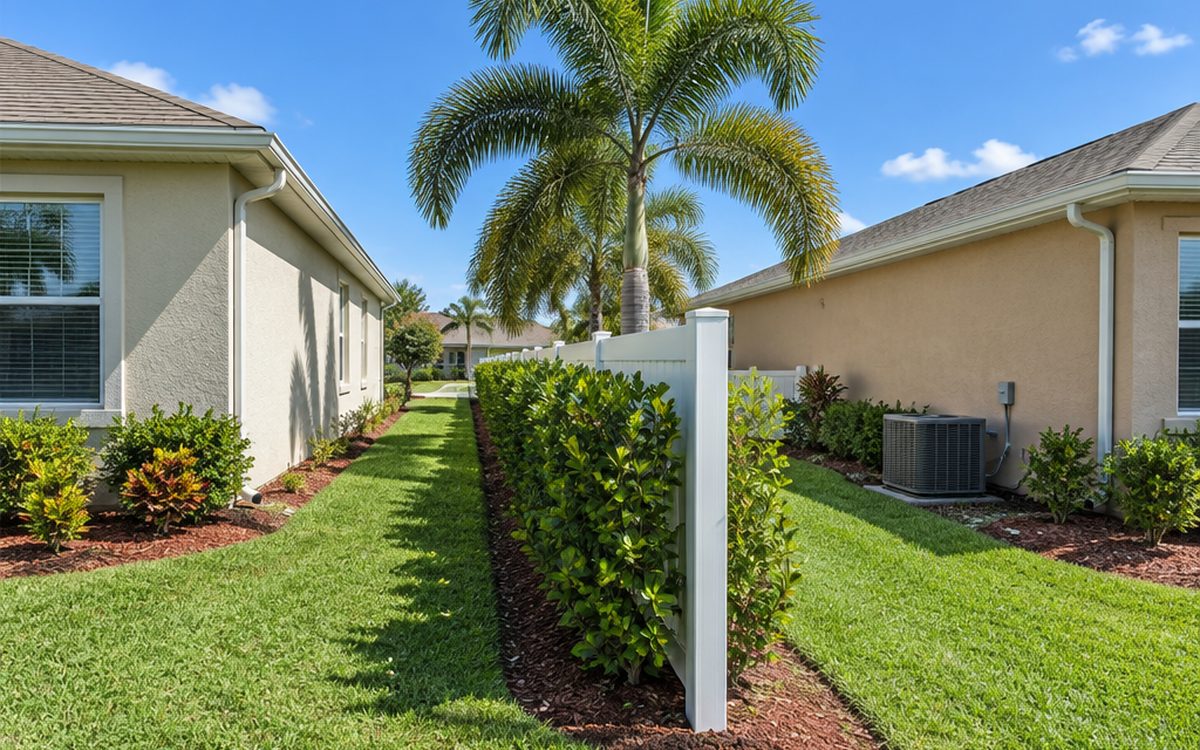
If your neighbor had pest control and now you have bugs, some of them may have moved over, but most of the time the bugs were already living in the space you share. A fence does not stop ants, roaches or roof rats. In Brevard County the fix is the same either way: find out what the pest is, close the way in, and take away what it came for.
TL;DR
- A treatment next door can push some pests around. It does not create new ones.
- The usual reason is shared ground: the same shrubs, palms, fence line and moisture on both sides.
- Detached homes see less of this than duplexes, townhomes and condos with shared walls and plumbing.
- Name the bug first. The fix for ants, roaches and rats is not the same.
- Be careful of a door knock that says your neighbor's spray will send bugs your way. Look at your own house first.
Can a neighbor's pest control push bugs into my house?
It can, a little. A treatment around the outside of a house is meant to stop pests at that house. A roach or an ant that meets it may keep walking and end up at the next wall over. Pest companies say this, and some of their customers say they have seen it.
What nobody has shown is that it happens a lot. We could not find Florida research that measures it, so we will not give you a number.
Here is the honest part. A treatment does not make bugs. If roaches turned up at your place a week after the truck came next door, they were living close by before the truck ever came. They were in the mulch, the hedge, the palm, or the wall you share. The treatment may have changed where they walk. It did not change how many there were.
Why my neighbor had pest control and now I have bugs
Two homes on one street share more than a fence. Think about what sits on both sides of the line:
- Plants. A hedge row, a palm or an oak that touches both roofs.
- Water. Low spots, irrigation overspray and AC drain lines.
- Food. Pet bowls on a lanai, a bird feeder, fruit on the ground.
- Cover. Mulch beds, wood piles and stacked pots against a wall.
If those things are on your side too, you have the same pest pressure your neighbor has. The difference is that they are treated now and you are not.
Shared walls make it worse. UF/IFAS researchers say shared plumbing and wall voids between units are part of what makes roaches so hard to clear in multi-family buildings. So in a duplex, a townhome or a condo in Palm Bay or Viera, the roach problem is often one problem with two front doors.
Which pests really cross the line?
- Ants. Colonies grow and forage along the ground, so a trail can start in one yard and end in the next kitchen. Our post on why you keep seeing ants in your home covers how to follow one.
- Roaches. Palmetto bugs live outside and walk in. German roaches live inside and travel through shared walls and pipes.
- Roof rats. These cross a whole street without touching the ground.
- Termites. Subterranean termites are already in the soil in most Brevard neighborhoods. A neighbor's treatment does not send them to you. If you see swarmers or mud tubes, that is your own house to check.
What we see in Brevard
Roof rats are the clearest case. In Melbourne and across the Space Coast, a roof rat travels on tree limbs, fence tops and utility lines. That is how it crosses a neighborhood without ever touching open ground. When a rat shows up in one attic, the house next door often has the same palm, the same orange tree or the same bird feeder close by. A food source near the house is nearly always part of the story.
So when a customer tells us the rats came from next door, we do not argue. We walk the outside of their house, because the gap they used is on their roofline, not the neighbor's.
What to do now
- Name the pest. Take a clear photo. Small tan roaches in the kitchen and big dark ones on the porch are two different jobs.
- Walk your side of the line. Trim branches back from the roof, pull mulch off the wall, and pick up fallen fruit.
- Close the way in. Check door sweeps, gaps around pipes and the garage door seal. Our post on how small a hole a rat can get through shows what to look for.
- Talk to your neighbor. Ask what they were treated for. If you share a wall, treating both sides around the same time helps.
- Give it a week. A few strays after a treatment next door often settle down on their own. A problem that grows does not.
When to call somebody
If you see the same bugs week after week, see them in more than one room, or hear something in the attic, it is time for an inspection. It is the same advice we give when bugs show up right after your own treatment: a few is normal, a steady stream is not.
Our general pest control service works on the outside, the entry points and the inside, depending on the plan.
Sources
- UF/IFAS News: National survey suggests why roach infestations persist in multi-family apartment buildings (2026)
- UF/IFAS: Ghost Ant (IN532)
Frequently Asked Questions
My neighbor had pest control and now I have bugs. Why?
Some of the bugs may have moved over, but most of the time they were already living in the space you share. A treatment next door can push some pests around. It does not create new ones.
Can a neighbor's pest control push bugs into my house?
It can, a little. A roach or an ant that meets a treatment may keep walking and end up at the next wall over. We could not find Florida research that measures how often it happens.
Do shared walls make it worse?
Yes. UF/IFAS researchers say shared plumbing and wall voids between units are part of what makes roaches so hard to clear in multi-family buildings. In a duplex, townhome or condo the roach problem is often one problem with two front doors.
What should I do if bugs show up after my neighbor's treatment?
Name the pest with a clear photo, walk your side of the line, close the way in, and talk to your neighbor about what they were treated for. A few strays often settle down within a week. A problem that grows does not.
Dealing with this at your place?
Gator Pest Control has served Brevard County since 1994. Free estimates, no contracts.
Get a Free Estimate Call (321) 253-1188