
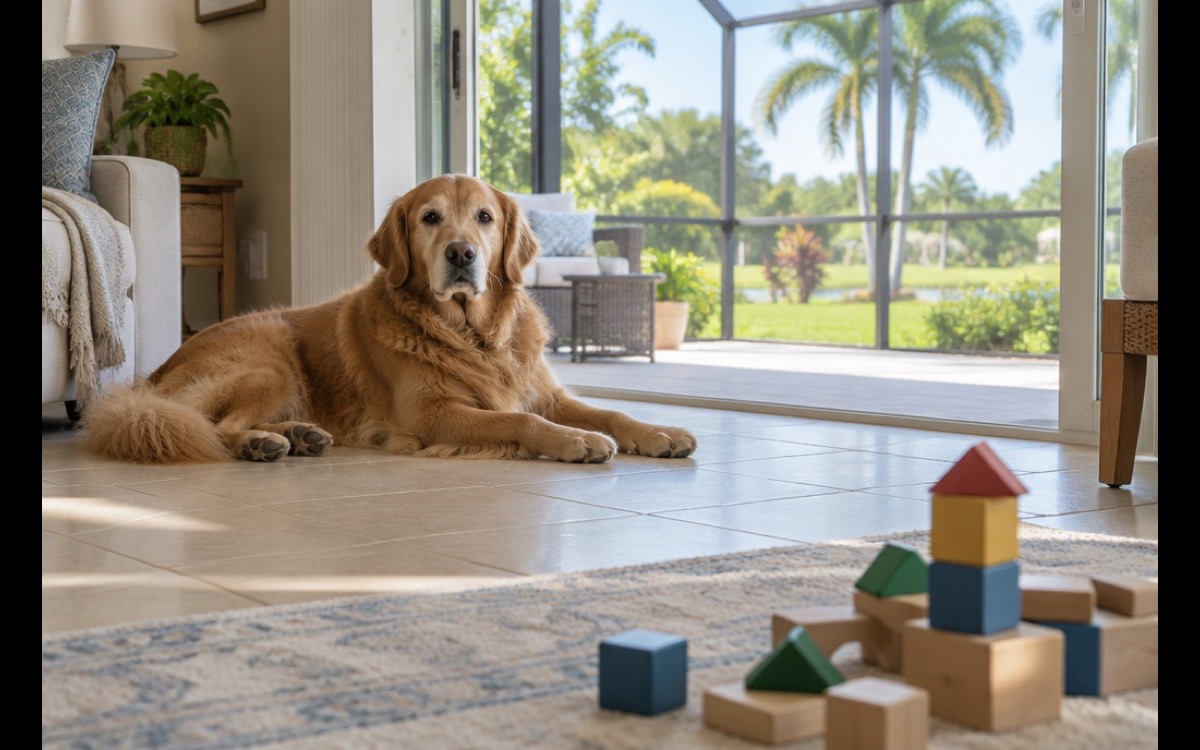
Yes, when it is done right. Is pest control safe for pets and kids? It is, as long as the products are used the way the label says, the baits go where small hands and paws cannot reach, and everyone stays off treated areas until they are dry. That is how we work in Brevard County homes, and it is the first thing we talk about when there is a dog at the door.
TL;DR
- The product label is the law. It says where the product can go and who has to stay away.
- Most of a modern treatment goes outside, into cracks and crevices, and into baits. Very little goes on open floors where a child plays.
- Keep kids and pets off treated areas until they are dry. That is the rule that covers almost everything.
- Before the visit, pick up pet bowls, toys, bedding and chew bones from the areas we will treat.
- Tell your technician about every animal in the house, including fish and birds.
Is pest control safe for pets and kids if it is done by the label?
Every product a pest control company uses in Florida has to be registered with the EPA, and the label on it is not a suggestion. Federal law says it is a violation to use a product in a way the label does not allow. The label says where it can go, how much, how it has to dry, and when people and animals can come back. So the honest answer is this: it is safe when the label is followed, and following the label is my job.
The second part of the answer is where the product goes. Thirty years ago a pest treatment meant spraying every baseboard in the house. Today most of the work is outside, around the foundation, under the eaves, and along the places bugs travel. Inside, it goes into the cracks and gaps where roaches and ants live, not across the open floor. Baits for roaches and ants are small placements in cabinets and corners. The EPA calls baits a good first line of chemical defense because the exposure is low, as long as they are kept out of reach of children and pets. That last part is the whole point.
What we see in Brevard
This is the first question we hear from parents, and it is the right question. Parents in Melbourne and Palm Bay ask because a one year old spends the day on the tile and a Labrador licks everything. Good. The answer should change what the technician does.
What changes is simple. We ask about pets and kids before we start. We work outside first and do most of the job there. Inside, baits go up high or deep inside cabinets, never on an open shelf at knee height. We tell you what was treated and when it is dry. Ask what product went where and you get a straight answer. A company that will not tell you is the wrong company.
What to do before and after the visit
Before we arrive, the National Pesticide Information Center gives the same list we do:
- Pick up pet food bowls, water bowls, toys, chew bones and pet bedding from any room that will be treated.
- Put children's toys and anything that goes in a mouth off the floor.
- Cover fish tanks and turn off the air pump during an indoor treatment. Fish are the most sensitive animal in most houses.
- Move bird cages to a room that will not be treated. Birds are sensitive too.
- Tell the technician about every animal, including the cat who hides under the bed.
After we leave, keep pets and kids off treated areas until they are dry and the room has had some fresh air. For most indoor spot treatments that is a short wait. If we treat the lawn or the yard with a granular product, keep the dog off it longer, because granules need to dissolve and water in. Your technician will tell you how long for your home. If you see dead bugs in the days after, sweep them up and throw them away. We wrote about that in why you see more bugs after a treatment.
Do not add your own store spray or fogger on top of what we did. Most of the real risk to pets comes from a homeowner using a product without reading the label, in a closed room, with the dog still inside.
What to do now
- Write down every animal in the house and tell your technician before the first visit.
- Clear pet bowls, bedding, toys and chew bones from the rooms being treated.
- Cover the fish tank and move the bird cage.
- Ask what will be used, where it goes, and when it is dry. A good company answers all three.
- Keep kids and pets off treated areas until dry, then go back to normal.
When to call somebody
If a pet or a child gets into a pest control product, do not wait to see what happens. Call your vet or the Poison Control line, and have the product name ready. The National Pesticide Information Center answers general questions at 800-858-7378. For the treatment itself, ask your questions up front. Our general pest control page explains what a visit covers, the pricing page lists every plan, and the estimate is free with no contract.
Sources
- EPA: Do's and Don'ts of Pest Control
- EPA: Introduction to Pesticide Labels
- National Pesticide Information Center: Pets and Pesticide Use
Frequently Asked Questions
Is pest control safe for dogs, cats and kids?
Yes, when it is done by the label. Every product a Florida pest control company uses is registered with the EPA, and federal law requires it to be used the way the label says. The label states where the product can go, how it dries, and when people and animals can come back. Most of a modern treatment goes outside and into cracks, crevices and baits, not across open floors.
How long do I keep pets and kids off treated areas?
Until the treated areas are dry and the room has had some fresh air. For most indoor spot treatments that is a short wait. A granular lawn treatment needs longer, because the granules have to dissolve and water in. Your technician will tell you how long for your home.
What should I do before the pest control visit?
Pick up pet food and water bowls, toys, chew bones and bedding from the rooms being treated, put children's toys off the floor, cover the fish tank and turn off its air pump, move bird cages to a room that will not be treated, and tell the technician about every animal in the house.
Where do the baits go if I have a toddler or a dog?
Up high or deep inside cabinets, never on an open shelf at knee height. The EPA considers baits a low exposure option as long as they are kept out of reach of children and pets, so placement is the whole point.
What if my pet or child gets into a pest control product?
Do not wait to see what happens. Call your vet or Poison Control right away and have the product name ready. The National Pesticide Information Center answers general questions at 800-858-7378.
Dealing with this at your place?
Gator Pest Control has served Brevard County since 1994. Free estimates, no contracts.
Get a Free Estimate Call (321) 253-1188