
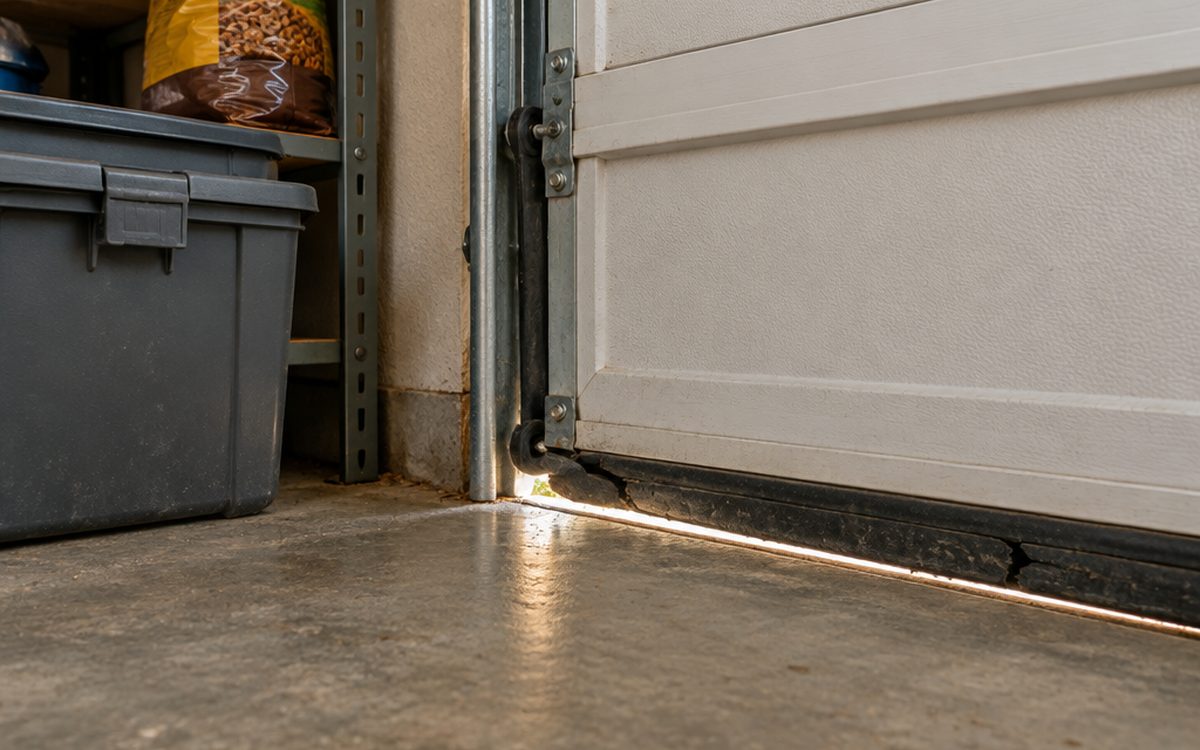
How to keep rats out of your garage in Brevard County comes down to three things. Fix the rubber seal along the bottom of the garage door, because a worn corner is the easiest way in. Get the dog food, the bird seed and the cardboard boxes off the floor. Then seal the small gaps where pipes and wires come through the wall. Do it in October, before the first cool night sends roof rats looking for a dry place to sleep.
TL;DR
- The bottom seal on the garage door is the first thing to check. A chewed or flattened corner is a door for a rat.
- A rat needs a gap a little wider than half an inch. A mouse needs a quarter inch.
- Pet food, bird seed and grass seed in paper bags are a buffet. Move them into hard bins with lids.
- Seal gaps with metal, not foam alone. Rats chew through foam.
- Droppings along the garage wall mean rats are already using it. That calls for an inspection and traps, not a spray.
Why the garage is the first room rats find
The garage has the widest door in the house, and it closes against bare concrete. It is dark, quiet and full of boxes. Many Florida garages also hold the dog food and the bird seed. That is shelter and food in one room.
Rats do not need an open door. The University of Nebraska extension guide on rodent proofing says a rat needs a gap only a little more than half an inch, and a mouse a little more than a quarter inch. The CDC also says to seal outbuildings and garages the same way you seal the house.
How to keep rats out of your garage: the two minute door check
Stand inside the garage in the daytime with the door down and the lights off. Look at the bottom of the door. Daylight at either corner is a gap a rat will find.
Then look at the seal itself:
- The rubber strip along the bottom. It should sit flat on the concrete the whole width of the door. Sun and salt air make it hard, and a hard seal cracks and curls.
- The corners. This is where rats chew. A rough, ragged edge with a dark rub mark is a door in use.
- The side seals. The vinyl stop molding along each side should touch the door. If it has pulled away, you have a slot.
- The floor. Concrete that has sunk or cracked under the door leaves a low spot the seal cannot reach.
A new bottom seal is a hardware store part. If the floor has a dip, a threshold strip glued to the concrete closes it. If rats keep chewing the same corner, a strip of metal flashing over the bottom edge of the door stops it for good.
What else is open in a Florida garage
The door gets the blame, but it is not the only hole.
- The water heater and AC lines. Pipes and the AC line set come through the wall. The hole is often cut too big and never sealed.
- The attic hatch and the top of the wall. In some garages the drywall stops short of the trusses. From the attic, a rat drops straight down into the garage.
- The side door. The person door to the yard rarely has a door sweep.
Seal the small gaps with copper mesh or stainless steel wool, then caulk over it so it stays put. For bigger holes the CDC says to use hardware cloth, metal sheeting or cement. Foam on its own is a snack, not a seal. How small a hole a rat can get through covers the rest of the house.
What we see in Brevard
Around here the garage rat is almost always the roof rat, the one people call the citrus rat or the palm rat. It comes off a palm or a fence onto the roof, or walks in at a chewed door corner. On homes from Melbourne to Palm Bay, the first sign a homeowner notices is usually droppings along the garage wall or on top of a stored box, not noise. When we do a rat inspection, the garage is on the list every time, along with the attic, roofline, soffits and vents. A rat that has the garage usually has a way into the attic too.
What to do now
- Do the daylight test. Door down, lights off, look at the bottom corners.
- Replace a hard, cracked or chewed bottom seal. Add a threshold strip if the floor dips.
- Move food into hard bins. Dog food, cat food, bird seed, grass seed. Lids that latch.
- Get boxes off the floor and off the wall. Shelves and plastic bins. Rats nest in cardboard.
- Seal pipe and wire holes with metal first, then caulk. Check the hatch and the top of the wall.
- Trim palm fronds and limbs off the roof. That is the bridge from the yard to the garage attic.
When to call somebody
If you find droppings, a chewed bag of food, or a nest in a box, rats are already inside. Sealing the door tonight can trap them in the attic, so get it looked at first. Our rat inspection is free. We check the garage, attic, roofline, soffits and vents, then give you a plain plan: seal the entry points, trap what is inside, and clean up. Rodent work is quoted after the inspection, separate from the general pest plans, and there is no contract.
Sources
- CDC: How to Seal Up to Prevent Rodents
- University of Nebraska Extension: Rodent-Proof Construction and Exclusion Methods
Frequently Asked Questions
How do rats get into a garage?
Most often under the big garage door, at a bottom seal that is worn, cracked or chewed at the corners. Other ways in are the holes cut for pipes and the AC line, a side door with no door sweep, and the gap at the top of the garage wall from the attic.
How small a gap does a rat need to get into my garage?
A gap a little more than half an inch, according to the University of Nebraska extension guide on rodent proofing. A mouse needs a little more than a quarter inch.
How do I check my garage door seal for rats?
Stand inside in the daytime with the door down and the lights off. Daylight at either bottom corner is a gap a rat will find. Look for a hard, cracked or curled rubber strip, a chewed corner with a dark rub mark, side stop molding that has pulled away from the door, and a low spot where the concrete has sunk.
What attracts rats to a garage in Florida?
Shelter, quiet and food. Dog food, cat food, bird seed and grass seed in paper bags are the usual food source. Cardboard boxes on the floor give rats a place to nest. Move food into hard bins with latching lids and get boxes onto shelves.
Should I seal the garage if rats are already inside?
Not yet. If you find droppings, a chewed bag of food or a nest, rats are already inside, and sealing the door can trap them in the attic. Get an inspection first. Our rat inspection is free, and the plan covers sealing, trapping and cleanup.
Dealing with this at your place?
Gator Pest Control has served Brevard County since 1994. Free estimates, no contracts.
Get a Free Estimate Call (321) 253-1188