
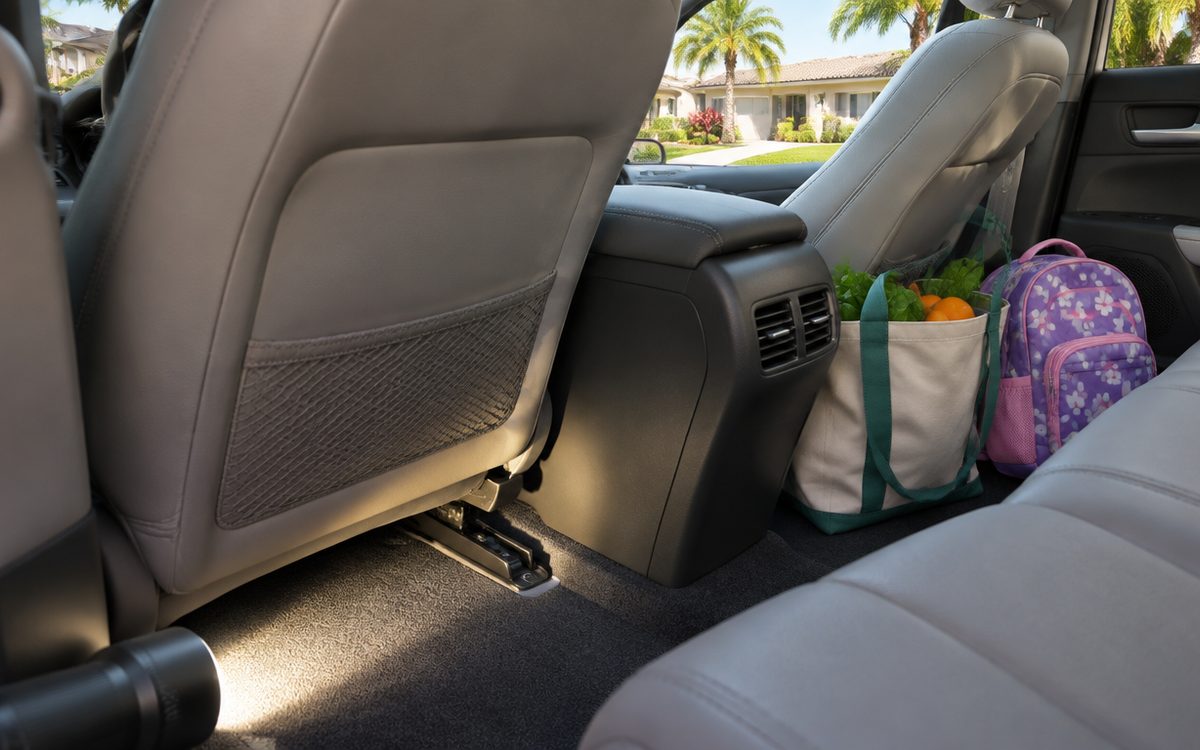
German roaches in car seats, cup holders and floor mats almost always rode in on something: a grocery bag, a backpack, a lunch box or a cardboard box. In Brevard County, a roach in the car is usually a clue that the real colony lives somewhere else, most often at home or at work. Clean the car and set bait, then find the source, or they keep coming back.
TL;DR
- German roaches live and breed indoors. They do not walk into a car from the parking lot.
- They ride in on bags, boxes, backpacks and anything stored in a kitchen that has them.
- Inside the car they hide under seats, in the console, the glove box and the door pockets.
- Do not set off a bug bomb in a car.
- If you keep seeing them, check your kitchen. The car is rarely the source.
How do German roaches get in a car?
UC IPM says German roaches live and breed entirely indoors. So a German roach in the car did not crawl up the tire. Somebody carried it in.
The usual rides are the things you move between a building and the car every day:
- Grocery bags and reusable totes that sit on a kitchen floor
- Backpacks and lunch boxes
- Cardboard boxes, deliveries and moving boxes
- Pizza boxes and takeout bags
- A purse or a work bag that sits under a desk
A female German roach carries her egg case with her until a day or two before it hatches, UC IPM says. Rutgers says a typical case holds about 40 eggs. So one female riding in a bag can turn into a lot of roaches in a short time.
Can German roaches live in a car?
They can for a while, and they can breed there if there is food. Crumbs in the seat track, a spilled drink and a forgotten fast food bag are enough. They hide in the dark spots: under the seats, inside the center console, the glove box, the door pockets and the trunk lining.
But a car is a hard place for them to last. UC IPM says German roaches like it around 70 to 75 degrees and humid. A Florida car parked in the sun gets a lot hotter than that, and a clean car has no water and little food. That is why a car full of roaches is less common than a car with a roach now and then. The steady trickle is the tell. Something keeps bringing new ones in.
Why you should not bomb a car
It is tempting to set off a fogger and close the doors. Do not. Rutgers lists total release foggers as products it does not recommend for German roaches, and UC IPM says foggers can push roaches into other areas without killing them. In a car, that means deeper into the dash and the door panels, where you cannot reach them.
A bomb also leaves residue on the seats, the wheel and every surface you touch. Spraying into vents and electronics is no better. A car is a small closed space, so less is more. Clean first, then use bait, which they carry back to where they hide.
What we see in Brevard
The German roach is the small tan one with two dark stripes behind the head. In a Brevard home it very often came in with groceries, cardboard boxes or a used appliance. A car is just one more stop on that same trip.
Ron's point is that German roaches build resistance, so a real job means rotating products in a set order, timed to their life cycle. That matters here too. If the car has them, the kitchen it came from has them, and one spray in either place will not end it. We cover the timeline in how long it takes to get rid of German roaches.
What to do now
- Empty the car. Take out every bag, box, seat cover and floor mat. Throw away food wrappers and cups.
- Vacuum everything. Use a crevice tool on the seat tracks, between the seats and the console, the door pockets and the trunk.
- Set bait, not spray. Put gel bait or bait stations under the seats and in the trunk corners, away from where kids and pets sit.
- Stop the rides. Keep grocery totes, backpacks and boxes off the kitchen floor, and shake them out outside before they go in the car.
- Check the source. Look under the kitchen sink, behind the fridge and beside the stove with a flashlight at night. Sticky traps there tell you a lot.
When to call somebody
If the car stays clear after a cleaning and the kitchen traps come up empty, you likely brought in a stray and you are done. If roaches keep showing up in the car, or the traps at home catch them, the colony is in the building. German roaches are part of our general pest control service, and a visit starts with the kitchen, not the car. If you are not sure what you saw, our post on Florida bugs that look like roaches can help you tell.
Sources
Frequently Asked Questions
How do German roaches get in a car?
Somebody carries them in. UC IPM says German roaches live and breed entirely indoors, so they ride in on grocery bags, backpacks, lunch boxes, cardboard boxes and work bags from a building that has them.
Can German roaches live in a car?
For a while, and they can breed there if there are crumbs and spills. But UC IPM says they like it around 70 to 75 degrees and humid, and a Florida car in the sun gets much hotter than that. A steady trickle of roaches usually means something keeps bringing new ones in.
Should I use a bug bomb in my car for roaches?
No. Rutgers does not recommend total release foggers for German roaches, and UC IPM says foggers can push roaches into other areas without killing them. In a car that means deeper into the dash and door panels. Clean first, then use bait.
Where do German roaches hide in a car?
Under the seats, in the seat tracks, inside the center console, the glove box, the door pockets and the trunk lining.
If I find German roaches in my car, do I have them at home?
Often, yes. The car is rarely the source. Check under the kitchen sink, behind the fridge and beside the stove with a flashlight at night, and set sticky traps there.
Dealing with this at your place?
Gator Pest Control has served Brevard County since 1994. Free estimates, no contracts.
Get a Free Estimate Call (321) 253-1188